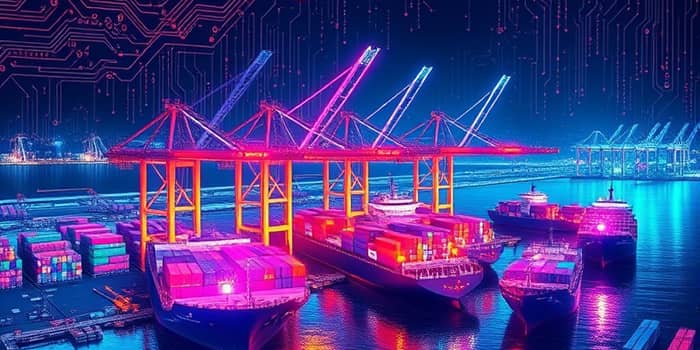
Global trade, the engine of modern economies, faces a critical juncture where outdated systems threaten to slow progress and increase risks.
Artificial Intelligence (AI) offers a beacon of hope, injecting intelligence and automation into every facet of trade finance to unlock unprecedented efficiency.
This transformation is not just about technology; it's about reshaping how businesses connect, transact, and thrive on a global scale. from manual burdens to automated excellence.
In this article, we delve into how AI is revolutionizing trade finance, providing practical insights to help you navigate this new landscape and harness its power for your operations.
Trade finance provides the vital backbone for cross-border commerce, offering liquidity, risk mitigation, and payment assurance to buyers and sellers worldwide.
Key instruments include letters of credit, documentary collections, guarantees, and trade credit insurance, all managed by banks as trusted intermediaries.
However, traditional processes are plagued by inefficiencies that stifle growth and innovation.
These challenges stem from deeply rooted structural problems that demand urgent modernization.
The urgency for change is underscored by the scale of global trade, which involves trillions of dollars annually and supports over 80% of international goods movement by sea.
As regulatory scrutiny increases, the need for smarter, faster solutions becomes more pressing than ever.
AI in trade finance is a broad and dynamic field, leveraging various technologies to analyze data, automate tasks, and improve decision-making across financial operations.
It combines machine learning for predictive analytics, natural language processing for understanding unstructured data, and optical character recognition for digitizing documents.
These tools are often integrated with anomaly detection for fraud analytics, chatbots for customer service, and workflow automation to streamline processes.
In some cases, AI complements blockchain and smart contracts to create more transparent and efficient systems. enhancing accuracy at high volumes.
This technological synergy allows institutions to maintain accuracy while handling massive transaction volumes, transforming how trade finance operates.
AI is being applied across the entire trade finance lifecycle, from document handling to customer experience, driving significant improvements in efficiency and security.
Each use case addresses specific pain points, offering tangible benefits that can inspire businesses to adopt these innovations.
For example, BNP Paribas deployed an AI solution in 15 countries, processing nearly 40,000 transactions with faster data processing and enhanced AML compliance. driving systemic improvements globally.
Moreover, AI-powered chatbots and virtual assistants improve client experience by answering routine questions and guiding users through processes.
Reporting and analytics provide real-time dashboards on portfolios, enabling data-driven decisions on risk and strategy.
This table illustrates how AI applications translate into concrete benefits, making trade finance more agile and resilient.
For businesses looking to modernize their trade finance operations, adopting AI requires a strategic approach that balances innovation with practicality.
Start by assessing your current processes to identify areas where AI can have the most immediate impact, such as document-heavy workflows or compliance checks.
Invest in pilot programs or partnerships with technology providers to test AI solutions on a small scale before full implementation. fostering a culture of innovation.
Educate your team on AI capabilities and benefits to build buy-in and ensure smooth adoption across departments.
Regularly review and update your AI strategies to keep pace with technological advancements and evolving market needs.
As AI continues to evolve, its role in trade finance will expand, offering even greater opportunities for innovation and efficiency.
We can expect more integration with blockchain for seamless smart contracts and enhanced transparency in transactions.
Advanced machine learning models will provide deeper insights into global trade patterns, helping businesses anticipate disruptions and optimize strategies.
The rise of IoT data from shipping and logistics will feed into AI systems, enabling real-time monitoring and automated triggers for payments and approvals. paving the way for autonomous trade.
This future promises a world where trade finance is not just faster and cheaper, but also more inclusive and resilient, supporting sustainable economic growth.
By embracing AI today, businesses can position themselves at the forefront of this transformation, ready to thrive in the dynamic landscape of global commerce.
References