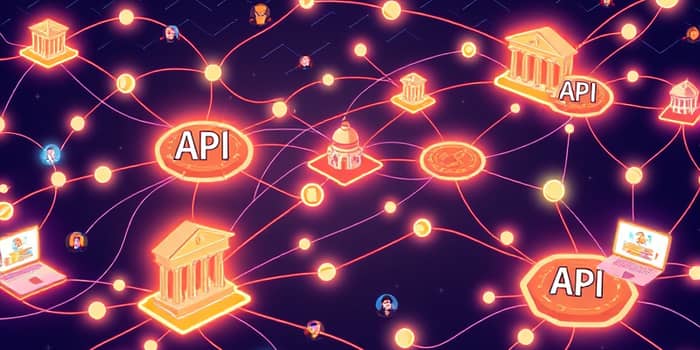
In today's fast-paced financial world, a transformative shift is underway, driven by the rise of API-first banking.
This approach goes beyond merely using APIs; it fundamentally redesigns banking infrastructure around APIs as core products from the very beginning.
By prioritizing APIs as primary interfaces, banks can achieve unprecedented agility and connectivity, revolutionizing how services are delivered and consumed.
This isn't just a technical upgrade; it's a strategic evolution that empowers institutions to thrive in a digital-first era.
At its heart, API-first banking means building financial products with APIs as the foundation.
Unlike traditional methods where APIs are add-ons, here, APIs are treated as primary products, designed for seamless integration from the start.
This enables everything from accounts to payments to be accessed programmatically, fostering a more open and interconnected ecosystem.
It transforms banking into a modular platform where capabilities can be easily reused and scaled.
The shift to API-first banking is driven by urgent market demands and evolving customer expectations.
With the global API banking market projected to grow from USD 3.5 billion in 2023 to around USD 17.5 billion by 2032, the stakes have never been higher.
Key drivers include open banking regulations, fintech competition, and the need for real-time, mobile-first experiences.
API-driven architectures can free up to 30% change capacity by reducing integration complexity, making this a business priority, not just an IT concern.
API-first banking stands apart by emphasizing design-first principles and modularity.
Design-first API contracts ensure that interfaces are agreed upon before implementation, speeding up development cycles and reducing risks.
This approach allows parallel work across teams, enabling faster delivery and more reliable integrations.
It fosters an ecosystem orientation where banks act as platforms, inviting external partners to innovate collaboratively.
The advantages of API-first banking are profound and multi-faceted.
It accelerates time-to-market, with APIs cutting fintech development time by 70–80% compared to traditional methods, reducing launches from years to months.
Operational efficiency soars as automation streamlines workflows and lowers costs.
For instance, API integrations can help businesses reduce operational costs by around 15%, while boosting customer satisfaction by about 20% through enhanced experiences.
Seamless integration between diverse systems eliminates custom point-to-point builds, making interoperability a reality.
Security is strengthened with consistent governance at the interface level, protecting against threats and ensuring compliance.
API-first banking is already transforming various financial scenarios.
In payments, it enables instant vendor payouts in marketplaces, ensuring real-time settlement and improved cash flow.
Embedded banking integrates services like lending directly into e-commerce checkouts, creating faster and smoother interactions for users.
For corporates, APIs connect ERPs for automated treasury management, providing real-time balances and forecasting.
This flexibility allows banks to offer tailored solutions, from SME financing in accounting software to investment tools for wealth management.
Adopting API-first banking isn't without hurdles, but they can be overcome with strategic planning.
Legacy system integration remains a key obstacle, requiring careful migration and modernization efforts.
Security concerns must be addressed with robust authentication and encryption protocols to protect sensitive data.
Regulatory compliance, especially in regions with open banking laws, necessitates ongoing vigilance and adaptation.
By prioritizing governance and developer experience, banks can mitigate these risks and capitalize on opportunities.
Looking ahead, API-first banking will continue to redefine the financial landscape.
It paves the way for hyper-personalized services and AI-driven insights, leveraging real-time data for smarter decisions.
As ecosystems expand, banks will increasingly act as platforms, monetizing APIs and fostering collaborative innovation.
This evolution promises a more inclusive and efficient financial system, where APIs underpin new revenue models and enhanced customer journeys.
API-first banking is more than a trend; it's a strategic imperative for future-proofing financial institutions.
By embracing APIs as core products, banks can unlock seamless integrations, drive innovation, and deliver exceptional value.
The journey requires commitment and adaptation, but the rewards—from agility to new business models—are immense.
As the financial world evolves, those who pioneer API-first approaches will lead the charge toward a more connected and dynamic future.
References