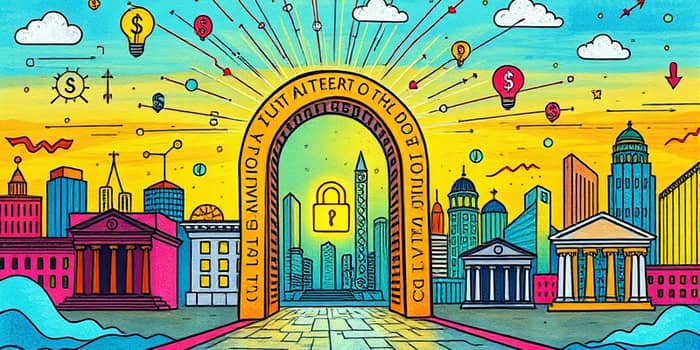
In an era of open banking and instant transactions, financial institutions face a barrage of threats and regulatory demands. API gateways have emerged as the central, policy-enforced front door to the vast universe of payment, account, and trading services. By unifying security, observability, and compliance into a single layer, they transform an organization’s digital defenses and operational agility.
API gateways serve as the single entry point between clients—mobile apps, partner fintechs, web dashboards—and backend microservices or core banking systems. They route, transform, and orchestrate requests, while centralizing non-business concerns like access control, rate limiting, logging, and governance into a unified layer.
Financial APIs carry high-value targets—everything from personally identifiable information and account numbers to credit scores and transaction histories. Regulations such as GDPR, PSD2, PCI DSS, and SOC 2 demand strict access control, customer consent, encryption, and comprehensive audit trails. Without a gateway enforcing consistent policies, each microservice team would risk fragmenting security and compliance.
Open banking and embedded finance have opened the floodgates to third-party apps, increasing the attack surface and making it imperative to maintain a controlled doorway for external connections. At the same time, customers expect real-time, mobile-first experiences. Institutions that expose more services via APIs must balance innovation with an unwavering commitment to security.
API gateways act as the ultimate “security front door,” enforcing advanced controls at scale:
Gateways provide uniform control and auditability across all API traffic, simplifying adherence to:
Internal and external audits become more manageable when every API call is recorded with user, endpoint, amount, IP, and device details. Companies like Lucid Financials leverage gateway-enforced policies and automated vulnerability scanning to maintain SOC 2 compliance with automated, tamper-evident logs.
Visibility is the lifeblood of security. Gateways capture granular logs—timestamps, user and device IDs, geolocations, response codes, and monetary values. Security teams can set up real-time monitoring & alerts for suspicious patterns such as repeated failed logins or rapid, high-value transactions.
Modern solutions integrate with AI-driven fraud engines, reducing the mean time to detect breaches from months to hours. They also discover and register shadow APIs—hidden endpoints that can expose sensitive logic—and bring them under governance.
Zero Trust demands “never trust, always verify.” API gateways embody this principle by authenticating and authorizing every request, regardless of source. Key pillars include micro-segmentation of payment, customer data, and reporting services, and dynamic policy evaluation based on user role, device health, and risk context.
Automated policy orchestration keeps rules up to date as threats evolve. Organizations report faster containment, reduced lateral movement in breaches, and stronger alignment with regulators’ expectations for continuous risk management rather than static controls.
Financial firms that deploy API gateways see tangible benefits: a 40% reduction in API-related security incidents, accelerated time-to-market for new services, and streamlined compliance workflows. By uniting security, traffic management, and observability, gateways unlock innovation without compromising trust.
As financial ecosystems grow more interconnected, gateways will evolve with AI-driven policy frameworks, deeper behavioral analytics, and even tighter integration with zero trust platforms. The gateway of tomorrow won’t just sit at the edge—it will orchestrate a dynamic, self-healing security mesh across the entire digital enterprise.
In the relentless race between innovation and threats, API gateways stand as the secure front door that empowers financial institutions to deliver seamless, real-time services while preserving the integrity and confidentiality of every transaction.
References