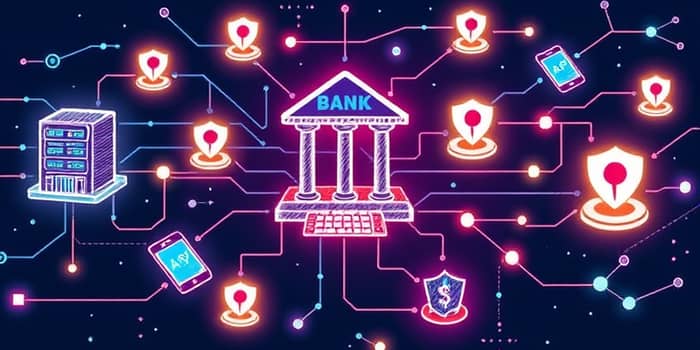
Open finance transforms the way consumers and businesses interact with a broad array of financial services. At its core, API security underpins every connection between banks, fintechs, and data platforms, ensuring that sensitive data and transactions remain shielded from threats.
In this comprehensive exploration, we uncover how robust security frameworks, global regulations, and cutting-edge technical controls converge to secure the open finance landscape. Readers will gain practical insights to strengthen their API defenses and foster trust in an interconnected financial world.
Open finance extends traditional open banking models by granting permissioned access not only to bank account data, but also to investments, pensions, insurance, mortgages, payroll, and more through standardized, secure, consent-driven APIs. This shift empowers consumers and businesses with holistic financial insights and streamlined services.
Previously, data aggregators relied on screen scraping—an insecure approach that exposed credentials and broke whenever interfaces changed. By replacing that method with tokenized API access built on OAuth2 and OpenID Connect, stakeholders achieve more reliable, controlled interactions.
Key participants in the ecosystem include:
Open finance operates within a complex matrix of regulations and technical standards designed to enforce strong customer authentication and secure communications. Understanding these frameworks is essential to maintaining compliance and reducing risk.
Beyond regulations, core technical standards shape API security:
As open finance scales, the number of exposed API endpoints multiplies, broadening the attack surface. Each integration touchpoint between banks, fintechs, and aggregators represents a potential vulnerability if not uniformly secured.
Security incidents can result in data breaches that expose KYC records, account balances, transaction histories, and personal identifiers. Equally concerning is the risk of fraudulent payment initiations or unauthorized account modifications, undermining user trust and damaging brand reputation.
Non-compliance with data protection regulations such as GDPR, PCI DSS, and sectoral cybersecurity laws can trigger financial penalties, litigation, and mandatory incident reporting. Ensuring continuous uptime and resilience of APIs thus becomes as critical as safeguarding the underlying data.
Open finance APIs face diverse technical and operational risks that must be systematically addressed:
Broken Object-Level Authorization: Also known as BOLA, this flaw allows attackers to manipulate resource identifiers and access other users’ records without proper validation.
Authentication and Authorization Gaps: Weak or inconsistent token checks, overly broad scopes, and missing server-side validations create opportunities for unauthorized access and privilege escalation.
Injection and Data Exposure: Improper input sanitization can lead to SQL/NoSQL injection, while excessive data exposure returns unnecessary PII or financial details, violating data minimization principles.
Shadow and Legacy APIs: Undocumented or outdated endpoints often lack modern security controls. Without proper discovery, these “zombie” APIs become easy targets for attackers.
Transport and Data-at-Rest Risks: Failure to enforce TLS or use outdated protocols leads to cleartext data in transit, while insufficient encryption at rest or poor key management compromises stored data.
Automated Threats and Abuse: Even secure APIs can be overwhelmed by credential stuffing, token brute-force, and high-volume scraping if intelligent rate limiting and anomaly detection are absent.
Third-Party and Supply Chain Risk: Reliance on external TPPs and aggregators introduces dependencies that must be vetted through rigorous security reviews, contractual requirements, and continuous monitoring.
Financial institutions and fintechs can adopt a layered defense model to mitigate these risks:
By integrating these measures within a governance framework aligned with PSD2, FAPI, FDX, and other standards, organizations can build resilient API ecosystems that inspire confidence among customers and regulators alike.
In the journey toward open finance, security is not an afterthought but the foundation upon which innovation and trust are built. As APIs continue to redefine financial services, a rigorous, multi-layered security posture will determine which players thrive in this interconnected era—and which ones fall prey to evolving threats.
References