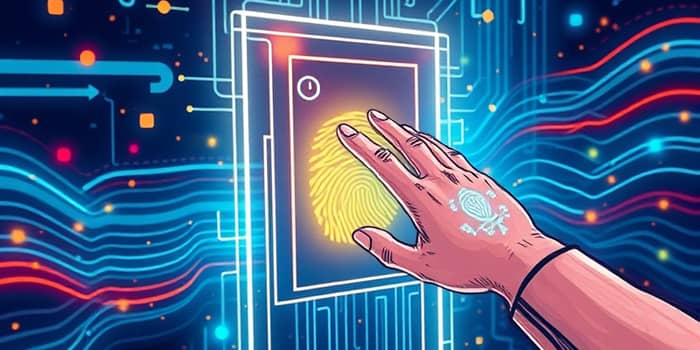
In an era of escalating digital threats, securing our identities has become paramount.
Traditional methods like passwords are falling short against sophisticated attacks.
Biometric authentication offers a transformative solution by harnessing unique physiological or behavioral traits for verification.
This technology is not just a trend but a fundamental shift in how we protect access.
It blends unparalleled convenience with robust security, making it essential for modern life.
From unlocking smartphones to safeguarding borders, biometrics are everywhere.
This article explores its rise, practical applications, and how you can leverage it.
At its core, biometric authentication verifies identity based on inherent human characteristics.
It answers the question, "Are you who you claim to be?" with high accuracy.
Unlike passwords or tokens, biometrics rely on something you are, making them harder to steal.
Common modalities include fingerprints, facial features, iris patterns, and voice signatures.
Behavioral traits like typing rhythms add another layer of security.
This approach minimizes fraud and enhances user experience significantly.
The biometrics market is experiencing explosive growth driven by digital transformation.
In 2024, the global market value reached USD 45.09 billion.
Projections indicate it could soar to USD 173.08 billion by 2033.
This growth is fueled by a compound annual growth rate of over 14%.
Key segments like identity verification are expanding rapidly due to regulatory demands.
Biometrics-as-a-Service is also rising, offering scalable solutions for businesses.
| Modality | Accuracy Level | Primary Use Cases |
|---|---|---|
| Fingerprint | High | Smartphones, access control |
| Facial Recognition | Very High | Border security, onboarding |
| Iris Scanning | Extremely High | Government ID, high-security sites |
| Voice Recognition | Moderate to High | Call centers, banking |
| Behavioral Biometrics | Improving Continuously | Fraud detection, monitoring |
This table highlights the versatility and reliability of different biometric methods.
Several key factors are accelerating the uptake of biometric authentication.
These drivers ensure biometrics remain at the forefront of security innovation.
Advancements in AI and machine learning are revolutionizing biometric systems.
Liveness detection is critical to prevent spoofing with photos or deepfakes.
Multimodal approaches combine traits for enhanced security layers.
Biometric authentication is transforming industries with practical, secure solutions.
Each sector benefits from tailored biometric implementations that boost trust.
Despite its benefits, biometric authentication faces hurdles like privacy concerns.
Embracing these challenges paves the way for more inclusive security systems.
To harness biometric authentication, start by understanding its principles.
Evaluate your needs for access control, whether for devices or online services.
Choose modalities that balance security with user convenience effectively.
Stay informed about emerging technologies and best practices.
Advocate for ethical use to protect privacy while enjoying enhanced safety.
By integrating biometrics, you can future-proof your security strategy seamlessly.
This journey towards secure access is not just about technology but trust.
Embrace the change and unlock a safer digital world with confidence.
References