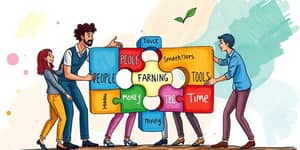
In an age marked by volatility and rapid change, organizations must evolve beyond traditional risk management. Building enterprise resilience is no longer a luxury—it’s an imperative. This article dives into the core concepts, pillars, and actionable steps that help firms not only withstand shocks but emerge stronger.
Enterprise resilience is the strategic capability to anticipate, withstand, absorb shocks, adapt to disruptions, and recover operations swiftly. It spans people, processes, technology, governance, and culture. From cyberattacks to natural disasters, resilient organizations ensure continuity at acceptable levels despite systemic discontinuities.
At its essence, resilience combines preparedness, real-time responsiveness, and continuous learning. Organizations that master these phases can navigate crises like global pandemics, supply chain failures, and economic upheaval.
Effective resilience programs revolve around three interdependent backbones: business continuity, crisis management, and adaptability. These elements guide organizations through the lifecycle of anticipation, preparation, response, recovery, and adaptation.
Frameworks often begin with risk diagnosis and dependency mapping, followed by establishing dedicated resilience teams. Real-time monitoring and continuous improvement ensure that plans evolve with emerging threats and business changes.
To ensure robustness, organizations must track metrics such as RTO, RPO, impact tolerances, disruption thresholds, and resilience maturity scores. Regular validation through exercises, simulations, and real-world recovery tests is essential for identifying weaknesses.
Feedback loops from incidents and drills drive continuous improvement. Integrating lessons learned into governance and reporting structures ensures accountability and clarity around roles and responsibilities.
Leading firms view resilience as a source of competitive advantage. By embedding risk-aware decision-making and AI-driven analytics, they anticipate disruptions before they occur. Post-COVID case studies highlight companies that leveraged strong supply chain networks, diversified sourcing, and digital collaboration tools to maintain service continuity and protect stakeholders.
In one example, a global manufacturer mapped thousands of interdependent suppliers, identified single points of failure, and introduced dual sourcing strategies. This proactive approach reduced downtime by over 60% during regional disruptions.
Another financial services firm adopted a zero trust model and behavioral analytics, cutting breach dwell time by half and ensuring rapid containment of cyber incidents. Their investment in employee resilience training and mental health support fostered a culture of vigilance and collaboration.
Enterprise resilience is a journey—one that demands strategic vision, cross-functional collaboration, and unwavering commitment to continuous learning. By understanding the core pillars, implementing structured frameworks, and measuring performance diligently, organizations can face uncertainty with confidence.
In a world of increasing complexity, those who build resilience into their DNA will not only survive shocks—they will thrive. Start today by diagnosing your vulnerabilities, engaging leadership, and taking the practical steps that turn disruption into opportunity.
References