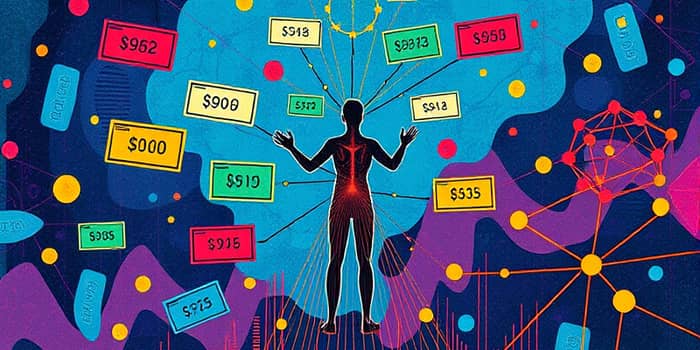
Traditional credit scoring systems have long relied on static rules and limited data points, providing a narrow lens on borrower risk. As financial ecosystems evolve, lenders and innovators seek more accurate, inclusive, and agile methods. Deep learning and advanced machine learning are now reshaping how creditworthiness is assessed, unlocking unprecedented insights and efficiency.
Conventional models, such as FICO-like scorecards, assign fixed weights to five primary factors: payment history, amounts owed, length of credit, new credit, and credit mix. While these methods brought consistency, they also introduced significant gaps.
Rule-based frameworks tend to ignore borrowers with thin or no credit files—often young adults, gig economy workers, or recently relocated individuals. They suffer from real-time event monitoring and adaptation limitations and may perpetuate bias, leading to underserved communities being unfairly denied access.
Static scorecards offer a rear-view mirror perspective, failing to capture nonlinear relationships or sudden shifts in behavior. They often require hours or days to process applications and provide limited explanations for decisions.
Deep learning models leverage complex neural networks to process vast quantities of information. Modern systems can analyze vast feature sets like behavioral signals, device metadata, transaction patterns, and even macroeconomic indicators to form a holistic picture of risk.
Unlike static methodologies, AI-driven scoring adapts to new data continuously, enabling lenders to make decisions in milliseconds rather than days. This shift empowers financial institutions to respond instantly to evolving market conditions and individual circumstances.
Traditional bureau data remains foundational, but deep learning adds layers of alternative inputs. Behavioral insights—such as hesitation time on digital forms, editing patterns, and navigation paths—combine with device fingerprints and geolocation signals to form orthogonal perspectives.
Natural language processing can digest unstructured text from customer communications, while convolutional networks assess image or document uploads. Together, these methods deliver a reduce operational costs significantly while improving detection of subtle risk indicators.
Deploying a deep learning credit score involves a cyclical workflow:
APIs and SDKs facilitate seamless integration with mobile apps or online platforms, enabling instant scoring at the moment of application. Additionally, explainable AI modules and automated fraud detection with high precision help satisfy regulatory and audit requirements.
Lenders gain from higher approval rates, lower default losses, and reduced processing times. Real-time monitoring tools support proactive portfolio management, spotting anomalies before they escalate.
Borrowers benefit from fairer evaluations and personalized product offerings. Individuals with limited credit history can obtain starter loans or credit-building lines, fostering financial inclusion and economic mobility.
Despite its promise, deep learning in credit scoring faces hurdles. Explainability remains critical: complex models must be interpretable for regulators and consumers. Ongoing research in augmented intelligence to enhance transparency aims to bridge this gap by combining human judgment with algorithmic insights.
Data privacy and governance protocols must evolve to ensure ethical use of personal information. Standardization of alternative data sources and regulatory frameworks will accelerate global adoption, bringing underserved populations into the financial mainstream.
Looking ahead, the convergence of real-time data streams, edge computing, and federated learning will further democratize access to credit. As models grow more sophisticated, we can expect increasingly personalized, fair, and resilient financial systems.
Deep learning is not a mere technological upgrade; it represents a paradigm shift in how risk is understood and managed. By transcending the limits of traditional models, AI-driven credit scoring holds the potential to unlock opportunity for millions, transforming lending into a more accurate, inclusive, and dynamic process.
References