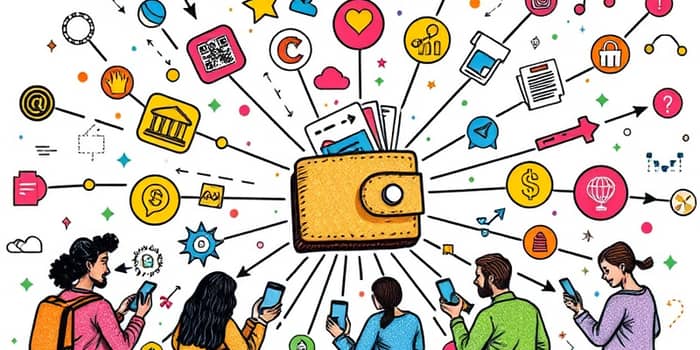
Digital wallets have rapidly transformed from simple payment tools into multi-service financial platforms that anchor vast digital ecosystems. As smartphone and internet penetration surge, users embrace wallets not only for transactions but also for banking, loyalty rewards, micro-loans, and identity verification. This evolution signals a shift from standalone payment methods to comprehensive and interconnected financial experiences.
In this article, we explore the market forces, regional leadership, competitive dynamics, and strategic imperatives shaping the future of digital wallets. We also highlight opportunities for providers, merchants, regulators, and end users to harness this powerful trend.
The global mobile wallet market is experiencing explosive growth. Valued at USD 10.14 billion in 2024, it is projected to reach USD 12.85 billion in 2025 and soar to USD 104.69 billion by 2034, exhibiting a remarkable CAGR of 26.3% between 2025 and 2034.
Meanwhile, the broader digital wallet market is expected to grow from USD 56.77 billion in 2025 to USD 119.17 billion by 2034 at a CAGR of 20.4%. The global mobile payment sector, already valued at USD 88.5 billion in 2024, may hit USD 121.3 billion in 2025 and USD 587.5 billion by 2030 (38.0% CAGR for 2025–2030).
Regional dynamics vary, but Asia-Pacific commands the largest share, driven by rapid urbanization, supportive regulation, and thriving e-commerce. China, India, and Brazil exhibit unique leadership, while Western markets continue strong adoption.
The global digital wallet arena features both tech giants and regional champions competing for user loyalty and transaction volume. Apple Pay, with a 38% U.S. share, processed USD 6 trillion in payments in 2022 and may capture 10% of global card transactions by 2025. PayPal holds 28% of U.S. wallet share and is cross-used by over 88% of Apple Pay, Google Pay, and Cash App users.
Google Pay claims 15% share in the U.S., while together with Apple Pay handling over 35% of global mobile wallet transactions. Regional super-apps like Alipay, WeChat Pay, GrabPay, GCash, and M-Pesa integrate payments with services from ride-hailing to micro-loans, cementing their positions as ecosystem hubs. In Brazil, Pix’s real-time rails blur the lines between payments and embedded financial services.
Technological advancements and infrastructure are foundational. Smartphone penetration, widespread internet access, NFC tap-to-pay, and QR codes enable seamless frictionless omnichannel payment experiences. The spread of 5G connectivity further accelerates on-demand transactions and mobile commerce.
Consumer behavior favors speed, convenience, and safety. The pandemic heightened demand for contactless interactions and loyalty integrations, pushing users toward wallets that offer secure tokenization and device-based authentication. Younger generations, comfortable with apps and super-apps, expect embedded financial services inside apps for banking, investing, and microcredit.
Merchants benefit from lower fraud via tokenization and authentication, reduced cart abandonment, and enhanced conversion rates. Wallets also unlock unbanked and underbanked communities by simplifying onboarding with lightweight KYC and remote verification, advancing financial inclusion across developing regions.
Policy and regulation have bolstered this shift. Government initiatives like Digital India and Pix’s instant payment rails exemplify how supportive frameworks and open access infrastructures foster innovation and competition in the wallet space.
Providers must evolve beyond payments, integrating banking, lending, insurance, and loyalty within a unified interface. Building partnerships with fintechs, retailers, and telecoms can expand use cases and drive stickiness as users rely on wallets for daily needs.
Merchants and platforms should embed wallets seamlessly into checkout flows, optimize for mobile-first experiences, and leverage data insights for personalized offers. Collaboration with wallet providers on tokenization standards and consumer rewards can enhance loyalty and repeat purchases.
Regulators and policymakers must balance innovation with security and consumer protection, ensuring open standards, interoperability, and data privacy. Encouraging competition and financial inclusion initiatives will sustain growth and broaden access.
Consumers can adopt wallets not only for payments but also for budgeting, savings, and peer interactions. Exploring features like contactless transit tickets, event tickets, and digital IDs can maximize the benefits of unified digital wallets.
The future of digital wallets lies in becoming holistic financial super-apps that weave together payments, banking, commerce, and identity. Forecasts indicate wallets will handle 65% of global online payments and 45% of POS transactions by 2030, powered by an 8% online usage CAGR.
Emerging trends include biometric authentication, AI-driven financial advice, and tokenized asset trading directly within wallet interfaces. Cross-border digital wallets may streamline remittances and international trade, further elevating global commerce efficiency.
Ultimately, stakeholders who embrace ecosystem thinking—focusing on value-added services, deep partnerships, and inclusive design—will shape the next era of digital finance. By placing user experience and security at the forefront, digital wallets can fulfill their promise: enabling a truly connected and inclusive global financial system.
References