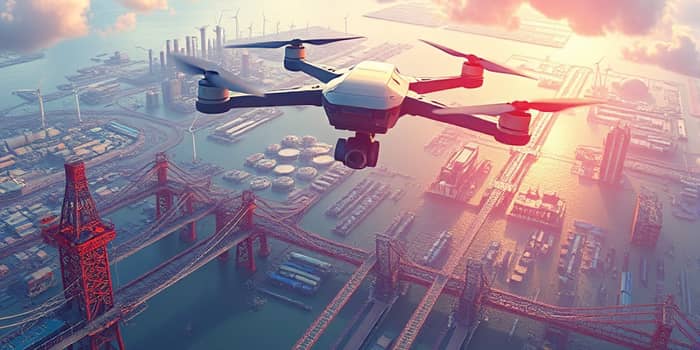
In an age where assets span oceans, deserts, mountains, and urban skyscrapers, the challenge of inspection and maintenance becomes monumental. Remote holdings—from offshore platforms to solar farms in arid regions—demand innovative solutions that balance safety, speed, and precision. Today, drone technology is rewriting the rules of asset management, empowering organizations to soar above limitations and discover insights once hidden from view.
The integration of unmanned aerial vehicles into enterprise workflows is more than a trend: it is a paradigm shift. By pairing flight capabilities with advanced sensors, artificial intelligence, and enterprise asset management systems, companies can unlock a new era of proactive decision-making. The result? proactive maintenance planning that safeguards value and preserves operational resilience.
A decade ago, drones were novelties—gadgets for hobbyists and filmmakers. Today, they are frontline tools for the world’s largest oil companies, real estate firms, and utility operators. These aerial platforms perform inspections across sites that once required scaffolding, cranes, or rope access teams.
Imagine a single pilot simultaneously monitoring the integrity of an offshore rig, mapping the layout of a sprawling warehouse, and assessing corrosion on high-voltage transmission lines. With time-saving aerial surveys and mapping, these tasks shift from weeks to hours, slashing costs and eliminating human exposure to hazardous environments.
Drone adoption spans every sector with remote assets. Key use cases include:
Whether evaluating the gross building area of a high-rise or detecting thermal anomalies in a solar farm, drones deliver high-resolution thermal imaging data that transforms raw information into actionable insights.
At the heart of every successful drone deployment lies a robust technological ecosystem. Live video feeds, orthomosaic maps, and photogrammetric 3D models feed into enterprise asset management (EAM) platforms, creating a single source of truth.
With seamless integration with IoT sensors and AI-powered analytics, organizations can define predefined flight routes, automatically detect anomalies, and generate condition reports without manual intervention. These automated workflows ensure that each inspection is consistent and that historical trends are captured for long-term analysis.
By embedding drone data directly into EAM systems like Infor, Trendspek, or Asseti, teams gain the power of predictive maintenance workflows that prevent failures before they occur.
The shift from reactive repairs to proactive management yields benefits felt across every level of an organization. Field teams operate remotely, planners build budgets on accurate condition scores, and executives leverage comprehensive dashboards for strategic decision-making.
Beyond the numbers, drone-driven programs foster a culture of continuous improvement. Maintenance teams can schedule interventions based on real-time analytics rather than calendar-driven cycles, preserving asset health and unlocking comprehensive digital twin models for deeper insights.
While drones solve many access barriers, organizations must still wrestle with regulatory frameworks, data management, and pilot training. Mature deployments address these challenges by implementing clear governance policies, secure data pipelines, and certified remote pilots.
Industry trends point to even greater capabilities on the horizon. Unsupervised AI systems will identify defects without manual labeling. Swarm drone technology will cover vast networks of pipelines or powerlines in record time. And 5G connectivity will enable real-time streaming of ultra-high-definition video directly to control centers.
For organizations managing remote holdings, the message is clear: leverage drone technology now to gain a competitive edge. Embrace the aerial revolution and transform your asset management into a story of resilience, efficiency, and foresight. The sky is no longer the limit—it is your vantage point.
References