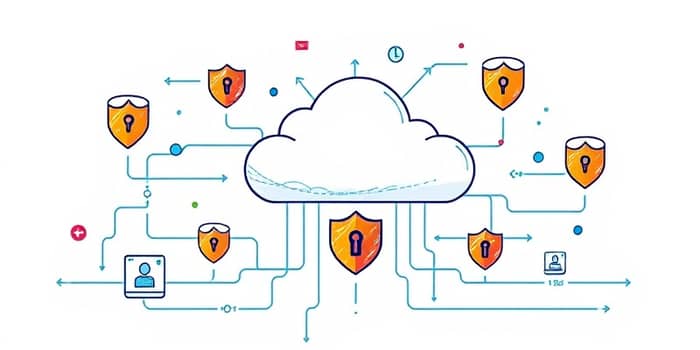
In an era where digital transformation is accelerating, financial institutions face a daunting challenge: protecting sensitive data from ever-evolving threats.
The traditional porous network perimeter has become inadequate, leaving critical assets vulnerable to sophisticated attacks.
This article delves into why perimeter-only defenses are failing and provides a roadmap for building a resilient security posture that prioritizes data, identities, and workflows.
By embracing modern approaches, organizations can not only comply with regulations but also foster unwavering consumer trust.
The stakes are higher than ever, with financial data being a prime target for cybercriminals worldwide.
Moving beyond the firewall is no longer optional; it is a strategic imperative for survival and growth in the financial sector.
As cloud adoption and remote work redefine operational boundaries, security must evolve to match this new reality.
Attackers exploit weaknesses in identity management and data access, bypassing traditional controls with ease.
This shift demands a proactive mindset focused on continuous protection rather than static defenses.
The erosion of the traditional perimeter is driven by several key factors that have reshaped the digital landscape.
Cloud computing and SaaS applications have decentralized data storage, making internal networks less relevant.
Threat patterns have also evolved to defeat perimeter defenses, leveraging human and technological vulnerabilities.
Phishing and credential theft grant attackers legitimate user accounts, masking their malicious intent.
The key takeaway is that relying solely on perimeter controls is a dangerous illusion in today's boundaryless world.
Financial institutions must assume breaches will occur and design security strategies accordingly.
Financial data is uniquely sensitive, with breaches carrying severe consequences for businesses and society.
Types of data at risk include a wide array of information that attackers relentlessly target.
The business impact extends beyond reputational damage to tangible financial and operational harm.
Third-party and ecosystem risks further complicate security, as breaches at vendors can ripple through the supply chain.
Financial data security must therefore extend beyond internal systems to include rigorous oversight of partners.
Regulatory frameworks are pushing financial institutions toward more transparent and secure data practices.
Open banking initiatives, such as the CFPB Rule 1033 in the U.S., mandate data sharing with authorized third parties.
This requires secure API management and robust authentication to protect sensitive information in transit.
Compliance pressures necessitate accurate data discovery and classification to avoid audit risks.
Without visibility into where data resides and who accesses it, reporting becomes guesswork, increasing penalties.
These regulations converge on the need for a data-centric security approach that prioritizes protection over perimeter.
The shift from perimeter-centric to modern security models is essential for addressing current threats.
Zero trust security replaces implicit trust with continuous verification of every access request.
Its core principles ensure that only authenticated entities can interact with sensitive resources.
In financial contexts, identity becomes the primary perimeter, with continuous checks on context and behavior.
Data-centric security focuses on protecting data itself, regardless of its location or movement.
This model asks critical questions about data access and usage to prevent unauthorized actions.
Work-centric security complements these models by safeguarding high-risk workflows, such as payment processing.
By integrating these approaches, institutions can build a resilient defense that adapts to evolving threats.
Implementing beyond-perimeter security requires concrete controls and measurable metrics to ensure effectiveness.
Start by conducting a thorough risk assessment to identify vulnerabilities in data flows and access points.
Deploy identity and access management solutions that enforce multi-factor authentication and role-based controls.
Use encryption for all sensitive data, ensuring keys are managed securely to prevent unauthorized decryption.
Establish continuous monitoring systems that provide real-time alerts on suspicious activities.
Metrics should focus on reducing incident response times and improving compliance audit scores.
Case-style examples illustrate the importance of this shift.
For instance, a bank that adopted zero trust prevented a credential theft incident by blocking anomalous login attempts.
Another institution used data-centric controls to encrypt customer data, mitigating the impact of a cloud misconfiguration.
Regular training and awareness programs help employees recognize phishing attempts and follow security protocols.
Partner with third-party vendors who demonstrate strong security postures through certifications and audits.
Continuously update security policies to align with regulatory changes and emerging threat intelligence.
By taking these steps, financial organizations can not only protect their assets but also inspire confidence in a digital future.
References