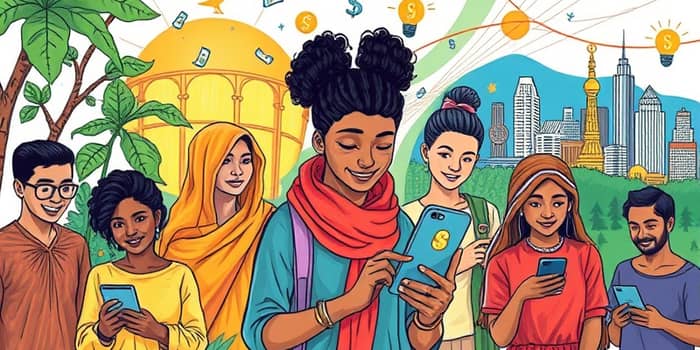
Financial inclusion is a cornerstone of economic empowerment, social stability, and sustainable growth. As digital innovations reshape the global economy, ensuring that every individual can access and use essential financial services has never been more critical. From mobile wallets in rural villages to fintech platforms in sprawling metropolises, technology is driving unprecedented progress toward universal banking access.
By exploring the data and trends emerging from the 2025 Global Findex and other leading sources, we can chart a clear path for closing inclusion gaps and accelerating inclusive prosperity.
Financial inclusion refers to the effort to provide all individuals and businesses with access to affordable financial services for everyone—including accounts, savings, credit, payments, and insurance. It is central to poverty reduction, economic development, and resilience against shocks.
In recent years, the rise of digitally enabled financial services has transformed the landscape. These services, accessible through mobile phones, cards, or the internet, have empowered millions who were previously excluded from formal banking systems.
According to the 2025 Global Findex, account ownership has surged worldwide. Today, 79% of adults have a financial account, up from 74% in 2021 and 51% in 2011. In low- and middle-income countries, account ownership reached 75%, marking an 80% increase over the past decade.
Yet, unbanked population remains large: about 1.3 billion adults lack a formal account. Over half of these individuals are concentrated in eight economies—Bangladesh, China, Egypt, India, Indonesia, Mexico, Nigeria, and Pakistan.
Mobile phone ownership and internet access are vital enablers. Globally, 86% of adults own a mobile phone, and in LMICs, 67% used the internet in the past three months. This connectivity fuels digital payments: 81% of account holders in emerging markets made or received digital transactions in 2024.
The advent of mobile money platforms enabled millions of users—particularly in Africa and South Asia—to leapfrog traditional banking infrastructure. Services like M-Pesa and bKash illustrate how digital wallets can become primary financial tools for the underserved.
Fintech innovations are not limited to payments. Partnerships between banks, startups, and telecom providers have created digital credit, savings, and insurance products tailored to local needs. In the Middle East and North Africa, fintech revenue grew 35% annually, and the ecosystem is projected to exceed $2.63 billion by 2030.
Artificial intelligence and data analytics are also reshaping the sector. By analyzing transaction patterns and mobile usage, AI-driven platforms offer personalized financial services, extending reach into remote communities and tailoring products to individual risk profiles.
Despite progress, significant barriers remain. The digital divide persists, particularly among women and rural populations. Women’s smartphone ownership is up to nine percentage points lower than men’s in some regions, exacerbating the gender smartphone ownership gap.
These challenges underscore the need to shift from mere access toward meaningful usage, financial health, and resilience. Encouraging regular account activity, savings behaviors, and responsible credit use is central to unlocking long-term benefits.
Progress hinges on coordinated action. Governments, regulators, private sector innovators, and international organizations must work together to build enabling environments. Policy frameworks that balance innovation with consumer protection are essential.
Initiatives like national digital identity systems, agent banking networks, and interoperable payment infrastructures illustrate the power of cross-sector collaboration. Public-private partnerships can scale services rapidly, leveraging the strengths of each stakeholder.
Across the globe, diverse approaches demonstrate the potential of technology-driven inclusion:
These case studies reveal that while no one-size-fits-all model exists, shared lessons on regulation, user-centric design, and digital literacy apply universally.
Looking ahead, the global ambition is universal financial inclusion. Emerging technologies like blockchain-based digital identities, secure open banking APIs, and AI-driven credit scoring hold promise to close the remaining gaps.
By combining robust policy frameworks, strategic partnerships, and cutting-edge technology, stakeholders can create inclusive financial ecosystems that uplift communities and drive equitable economic growth.
Financial inclusion is more than an economic goal—it is a social imperative. Ensuring every person can safely save money, access credit, make payments, and manage risk builds resilience, fosters entrepreneurship, and strengthens societies worldwide.
As we leverage technology for inclusion, we pave the way for a fairer, more prosperous future. The journey continues, but with commitment and collaboration, the vision of accessible finance for all is within reach.
References