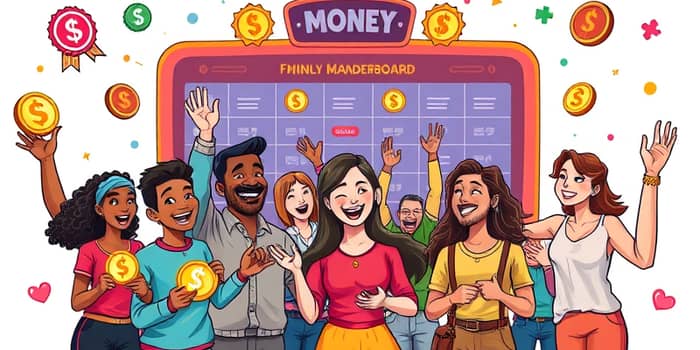
Imagine a world where mastering your finances feels as thrilling as leveling up in your favorite game. Financial literacy gaps leave 40% of Americans unable to cover a $400 emergency, and 78% of adults feel intimidated by money topics. But what if budgeting and investing could be transformed into interactive quests that captivate, motivate, and truly stick?
By embedding game mechanics into educational content, gamified financial education offers a fresh approach that blends entertainment with empowerment. It’s not just about earning points; it’s about building lifelong habits.
At its core, gamification uses motivating elements like badges, levels, and leaderboards to turn abstract concepts into tangible challenges. Learners earn points for completing modules on budgeting, savings, or investment simulations. Visual progress bars and friendly competition spark curiosity and boost effort.
Psychologically, these features tap into intrinsic and extrinsic motivation. Achieving a new badge unleashes dopamine, reinforcing positive behavior. Leaderboards foster engagement through healthy competition. Bite-sized lessons delivered in game form reduce anxiety and lower the barrier to entry.
Rigorous studies demonstrate that gamified approaches can dramatically improve knowledge retention and translate learning into real-world action. Compared to traditional workshops, game-based modules yield 50–75% higher retention rates.
Organizations also see measurable returns:
Young users benefit too: Greenlight’s “Level Up” feature boosted assessment scores by 94% and helped teens save three times more than average. Dedicated games like SavingsQuest reduced financial errors and bankruptcy risk after repeated play.
From global banks to startup apps, organizations are harnessing game design to drive financial wellness. Consider these inspiring examples:
Despite clear benefits, successful implementation requires thoughtful design. Gamification must align with learning objectives and avoid becoming mere busywork. Key considerations include tailoring difficulty levels, ensuring content relevance, and providing real-time feedback.
An inclusive approach helps dismantle intimidation. Starting with simple tasks, offering hints, and celebrating small wins fosters confidence. Embedding real-life scenarios—like planning for emergencies or retirement—bridges the gap between digital play and meaningful outcomes.
Measuring progress is vital. Tracking participation rates, goal completion, and behavioral changes allows continuous improvement and demonstrates tangible returns on investment to stakeholders.
As technology evolves, immersive experiences such as augmented reality simulations and personalized adaptive games will further revolutionize financial education. Imagine donning a VR headset to navigate a simulated stock market or collaborating in a virtual financial escape room.
With rising demand for accessible, engaging learning, institutions from banks to schools and employers will increasingly adopt gamified solutions. By harnessing the transformative power of interactive gameplay, we can empower individuals of all ages to build financial resilience, close literacy gaps, and create a more secure future for everyone.
Whether you’re an educator, HR leader, or app developer, integrating these principles can unlock deep engagement and lasting impact. Start small, iterate based on feedback, and watch how playful learning transforms financial confidence into tangible success.
References