As the world grapples with unprecedented challenges, the future of our food supply hinges on a quiet revolution in the fields.
Global agricultural technology, or agritech, is emerging as the keystone for sustainable nourishment, offering hope in the face of scarcity.
This transformation is not just about tools; it's about reimagining how we cultivate our planet to secure food for billions.
Population growth is a primary driver of this change.
By 2050, the world will host 9.7 billion people, demanding more food from limited resources.
Urbanization and rising incomes are shifting diets toward resource-intensive foods, intensifying pressure on land and water.
Resource constraints like declining arable land and water scarcity are pushing farmers to seek smarter solutions.
Climate change adds another layer of urgency, with increasing droughts, floods, and pest outbreaks threatening yields.
Agriculture itself contributes significantly to greenhouse gas emissions, making technology vital for decarbonization.
Agritech aims to increase yields while reducing inputs, creating a more resilient and sustainable system.
Governments and investors now see it as critical for achieving food security and net-zero targets.
The agritech market is experiencing explosive growth, reflecting its strategic importance.
ResearchAndMarkets estimates it at $24.42 billion in 2024, projected to reach $48.98 billion by 2030.
This represents a compound annual growth rate of over 12%, signaling robust expansion.
Investment trends underscore this momentum, with billions flowing into startups and innovations.
In 2023, agritech investments surpassed $27 billion, a 19% increase from the previous year.
Leading companies like John Deere and Bayer CropScience dominate the landscape, but startups are driving much of the innovation.
This market is still a small share of the global agriculture value, which exceeds $11 trillion, highlighting vast potential.
The growth is fueled by a convergence of technological advancements and pressing needs.
Several forces are accelerating the adoption of agricultural technologies worldwide.
Population growth and food security concerns are top priorities for governments.
Urbanization and changing diets increase demand for efficient production systems.
Digital technology advancements, such as IoT sensors and AI, are making precision agriculture feasible.
Falling costs of sensors and connectivity enable wider adoption, especially in developed regions.
Policy and regulatory support are also critical drivers.
Capital from venture funds and corporations is heavily invested in ag robotics and alternative proteins.
This ecosystem ensures continuous innovation and integration into traditional agriculture.
Agritech encompasses diverse technologies that are reshaping how we farm.
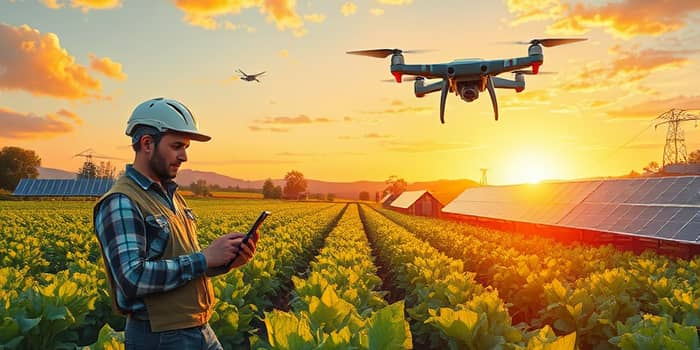
Precision agriculture and digital farming use data to optimize every aspect of cultivation.
GPS, drones, and satellite imagery enable variable-rate seeding and fertilizing.
This segment is valued at over $4 billion and growing at double-digit rates.
Benefits include increased yields and reduced environmental footprint through optimized input use.
Data-driven decision support systems help farmers manage risk and improve profitability.
Robotics, automation, and autonomous machinery are the fastest-growing segments.
This includes autonomous tractors, drones, and robotic weeders.
Drivers for this growth include labor shortages and the need for precision in timing.
These technologies address critical challenges in modern agriculture.
They enable farmers to do more with less, enhancing both productivity and sustainability.
Despite its promise, agritech faces hurdles that must be overcome.
High initial costs and infrastructure gaps can limit adoption, especially in developing regions.
Data privacy and cybersecurity concerns arise as farms become more connected.
There is a need for farmer education and training to fully leverage these technologies.
Policy inconsistencies and regulatory barriers can slow down innovation.
Future outlook is optimistic, with continuous advancements on the horizon.
Emerging technologies like gene editing and vertical farming will further revolutionize the sector.
Collaboration between governments, companies, and farmers is key to success.
By embracing agritech, we can build a food system that is resilient and sustainable for generations.
This journey requires commitment, investment, and a shared vision for a better future.
Every innovation brings us closer to a world where no one goes hungry.
References