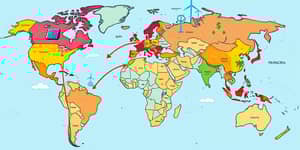
The world stands at a crossroads where age structures, fertility shifts, and migration flows redefine economic prospects and social cohesion.
The window of opportunity for growth emerges as societies move through the demographic transition model. In the earliest stages, both fertility and mortality are high, resulting in youthful populations and heavy dependency burdens. As mortality declines and fertility follows, the proportion of working-age adults surges, creating a temporary phase where fewer dependents per worker can drive faster growth.
This phase, known as the demographic dividend, depends on harnessing demographic momentum with targeted public action. Without such efforts, the dividend may go unrealized or even reverse as aging amplifies dependency. Over time, very low fertility and extended longevity give rise to post-transition aging, necessitating shifts toward sustainable social support systems.
Economists distinguish between the first and second dividends. The first arises from a larger labor pool and share of working-age people relative to dependents. The second dividend flows from expectations of longer retirements: households save more, boosting capital per worker and fostering durable income gains. An expanded framework identifies dividends in four sectors—economic growth, health, education, and governance—each contingent on policy choices.
Since 1950, global population has ballooned from 2.5 billion to over 8 billion today, a roughly 220% increase in just seven decades. Projections suggest around 10.4 billion by 2100, with growth decelerating and concentrated primarily in sub-Saharan Africa and parts of South Asia. Meanwhile, many high-income nations face stagnation or decline, transforming demographics from economic tailwinds into headwinds.
The United Nations estimates 56 countries currently enjoy high economic support ratios and stand poised for dividends: 38 in Africa, 10 in Asia, 5 in Latin America and the Caribbean, and 3 in Oceania. These nations collectively account for 69% of Africa’s population, 13% in Asia, 6% in Latin America and the Caribbean, and 23% in Oceania. Timing and policy will determine whether they convert demographic potential into sustained progress.
Demographic dividends materialize through intertwined channels. As fertility declines, the larger labor supply boosting output can elevate total production and per capita GDP. Lower youth dependency also facilitates higher higher female labor force participation, which not only widens household incomes but also enriches economic diversity.
Household savings often rise when fewer dependents require support. These resources fuel investment in housing, infrastructure, and enterprises. Anticipated longevity further encourages asset accumulation, strengthening financial markets and national income through domestic and international investments.
Investments in human capital multiply returns. Families and governments can allocate more per child on healthcare, nutrition, and education. Expanded enrollment at secondary and tertiary levels cultivates skilled workforces, essential for transitioning from agriculture to technology-driven industries.
Finally, demographic shifts can spur structural transformation. Favorable age distributions expand consumer markets, underpinning growth in manufacturing and services. Educated youth cohorts also invigorate governance, civic engagement, and gender equality when institutions are inclusive and responsive.
Turning demographic shifts into dividends demands comprehensive policies and robust institutions. Key preconditions include:
Advanced economies—including Western Europe, Japan, and parts of East Asia—benefited from baby-boom expansions of the labor force. Now, as retirees outnumber new entrants, old-age dependency ratios climb and fiscal pressures mount. Debates center on raising retirement ages, encouraging older-worker participation, and deploying automation and AI to offset labor shortages.
In contrast, India, many Southeast Asian nations, and several African countries are in the thick of their dividend windows. India’s median age remains far below China’s and advanced economies’, promising decades of vibrant productivity—provided that infrastructure, education, and job markets expand swiftly enough.
Sub-Saharan Africa holds perhaps the greatest untapped potential: a youthful population poised to swell urban and industrial sectors. Yet low completion rates in primary and secondary education risk a “lost dividend” without accelerated investment. Latin American and Caribbean countries straddle both dynamics: some enacting reforms to extend their dividend phase, others confronting aging headwinds.
Demographic dividends are not destiny. Realizing their promise requires foresight, coordination, and sustained commitment. Policymakers must champion family planning, bolster healthcare systems, and revolutionize education to match 21st-century demands. Businesses and civil society should innovate in training, entrepreneurship, and financial inclusion to harness youthful energy.
International cooperation can accelerate progress: sharing best practices, mobilizing resources, and fostering global value chains. As nations confront a mosaic of demographic trajectories—some surging, others aging—the collective challenge is to adapt social and economic models to shifting age structures.
Ultimately, the choices made today will echo for generations. By aligning demographic change with strategic investments, societies can transform potential risks into engines of prosperity and resilience, securing a more inclusive and dynamic future.
References