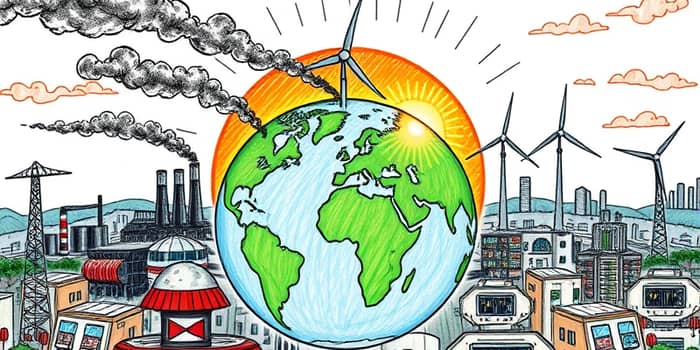
The world is at a critical juncture in the fight against climate change. The global energy transition offers a path to a sustainable future, but it is fraught with complexities and uncertainties.
Currently, we are off-track for Paris goals, particularly the ambitious target of limiting warming to 1.5°C. This gap underscores the need for accelerated efforts across all sectors.
Despite challenges, progress is visible as clean energy surges forward. Renewables now dominate new power capacity, accounting for over 90% of all new global electricity capacity in recent years.
This rapid growth signals a shift, but fossil fuels still meet around 80% of rising energy demand. Balancing this duality is key to navigating the transition effectively.
Understanding where we stand is essential for charting the way forward. Analyses show that current policies lead to approximately 2.6°C warming by century's end.
Wind and solar output reached 4,000 TWh in 2024. They are expected to exceed 6,000 TWh by 2026, becoming the world’s top power source.
This progress must be matched by reducing fossil fuel consumption, which continues to rise globally.
Capital investment is a crucial driver of the energy transition. In 2025, global energy investment is estimated at about $3.3 trillion.
Two-thirds of this flows into clean energy options like renewables, EVs, and grids. This shift reflects growing financial commitment.
Risks involve project economics sensitive to policy changes. Deloitte projects US solar costs could rise 36-55% and onshore wind 32-63% due to tax credit shifts.
This table illustrates the varying outcomes based on action levels. It underscores the urgency of scaling efforts.
Policy frameworks are vital for steering the transition. The Paris Agreement's 1.5°C goal is increasingly out of reach, but 2°C remains achievable.
Carbon markets are evolving with China expanding its system and Japan launching GX-ETS in 2026. These efforts face challenges from fragmentation.
Compliance complexity rises as jurisdictions tighten green definitions. This adds to the risks for investors and developers.
Rising electricity demand is driven by electrification and digitalization. Global demand is projected to increase by about 4.5% in 2025.
This shift strains grid limits and complicates sustainability goals. It necessitates robust infrastructure to manage loads effectively.
Grid modernization becomes a critical constraint. Failure to address this could hinder energy security and competitiveness.
On the supply side, renewables lead with significant growth. China is expected to install 390 GW of solar PV in 2025, dominating global additions.
Opportunities include cost declines making utility solar cheaper than new gas. Risks involve oversupply, policy shifts, and curtailment issues.
Storage technologies are poised for rapid expansion. They are essential for balancing intermittent renewable sources.
Investment in grids must accelerate to support renewable integration. This includes new transmission lines and capacity auctions.
The global energy transition is a multifaceted journey. It offers immense opportunities for innovation and growth.
By leveraging investment, navigating policy, and strengthening infrastructure, we can mitigate risks. Collective action is key to success.
This transition is not just about avoiding climate disaster. It is about building a cleaner, more equitable world for future generations.
Let us move forward with determination and hope. The path is clear, and the time for action is now.
References