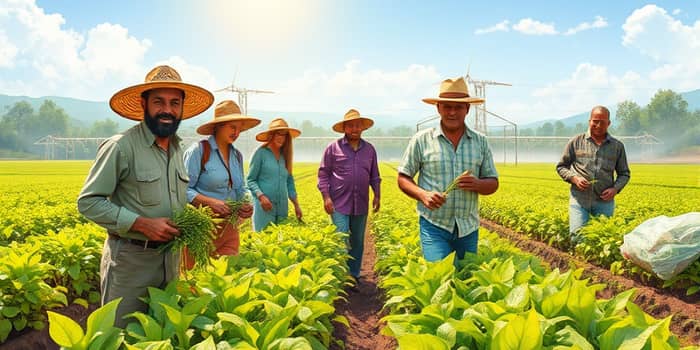
As the world grapples with the enduring challenge of hunger and malnutrition, the path to a more secure and nourished future lies in investing in agricultural innovation. This article explores the current state of food security, unpacks the root causes of persistent hunger, and highlights how targeted investments can transform landscapes, livelihoods, and lives.
In 2024, an estimated 673 million people were hungry, representing 8.2% of the global population. While this marks a reduction of 15 million from 2023, the absolute number of people facing chronic undernourishment remains higher than pre-COVID levels.
Beyond hunger, about 2.3 billion people suffered moderate or severe food insecurity, a figure that has increased by 335 million since 2019. Acute crises, driven by conflict and climate extremes, pushed over 295 million into emergency hunger in 2024. Humanitarian funding to food sectors risks falling by up to 45% in 2025, threatening vital life-saving support.
Regional disparities are stark. Sub-Saharan Africa may see 26.9% of its population food insecure in 2025, while Asia’s prevalence is projected to drop to 8.1% thanks to rising incomes and stable staple prices. Yet the number of people unable to afford a healthy diet remains at 2.60 billion globally, with increases in low-income countries intensifying the crisis.
Three interlinked factors fuel the global hunger challenge: conflict, climate, and economic shocks. In war-torn regions like Yemen and Sudan, displacement and infrastructure destruction lead to catastrophic malnutrition.
Climate change amplifies risk through recurrent droughts, floods, and heatwaves that cripple harvests and break supply chains. Meanwhile, food price inflation—peaking at 13.6% in early 2023—outpaced general inflation, eroding purchasing power for low-income households.
Underlying structural issues such as poverty, weak infrastructure, and limited market access compound vulnerability. Smallholder farmers, who feed much of the world, often lack land tenure security, credit, and risk-management tools, leaving them exposed to shocks and unable to expand production.
Despite these challenges, agriculture remains a powerhouse for economic development. In agrarian low-income countries, the sector can account for over 30% of GDP, while global agricultural output has quadrupled over six decades, outpacing population growth and raising per capita output by 53%.
Global net capital stock in agriculture, forestry, and fishing reached USD 6.5 trillion in 2022, up from USD 4.8 trillion in 2012. Yet public investment in rural infrastructure, irrigation, and extension services falls short of what is needed to unlock smallholder potential.
Foreign direct investment plays a critical role. Between the leading source countries—such as the USA (19.1% of global agricultural FDI, USD 52.9 billion) and Switzerland (8.6%, USD 23.9 billion)—and major destinations like Russia and China, flows exceed USD 157 billion. These investments can bring technology, expertise, and market access where they are most needed.
To harness the full potential of agricultural investment, stakeholders must adopt a multifaceted approach:
Public-private partnerships can unlock new financing streams and expertise. Combining government oversight with private agility enables projects that scale rapidly and adapt to local contexts. For example, blended finance instruments can de-risk investments in fragile regions, attracting impact investors without compromising social objectives.
Effective policy frameworks must include coherent land tenure laws, transparent regulatory systems, and incentives for sustainable practices. Governments should align agricultural policies with national food security strategies, ensuring that subsidies, tariffs, and research priorities drive inclusive growth.
Global food security is not a distant dream but an achievable goal if investments are guided by compassion, evidence, and strategic vision. By focusing on bridging the gap between supply and demand and empowering marginalized producers, the world can move closer to Zero Hunger.
The urgency is clear: we must invest in solutions that not only boost production but also enhance resilience, promote equity, and protect the planet. Every dollar channeled into agriculture has the power to transform communities, ignite local economies, and nourish future generations.
Now is the time for policymakers, businesses, financiers, and civil society to come together. Through targeted investments, collaborative innovation, and unwavering commitment, we can ensure that food security becomes a reality for all. The seeds we sow today will determine whether tomorrow’s table is set with abundance or scarcity.
References