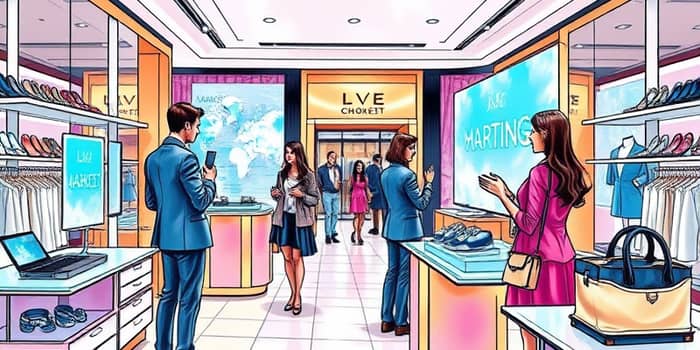
The global luxury market is poised for a transformative era, with projections indicating a return to low-to-mid single-digit growth through 2026.
This resurgence is driven by dynamic shifts in consumer behavior, regional dynamics, and technological innovation.
For investors, understanding these trends is crucial to capitalizing on opportunities in this evolving landscape.
Amidst economic uncertainties, the luxury sector demonstrates remarkable resilience, offering a beacon of stability.
It is a market where tradition meets innovation, creating unique prospects for those who look beyond the surface.
The personal luxury goods market is expected to reach approximately $440 billion by 2026, signaling steady expansion.
However, the broader luxury industry contracted by 2% to €358 billion in 2025, highlighting a cautious recovery phase.
Growth is projected to be moderate, with forecasts of 3-5% growth in 2026, emphasizing a shift towards sustainable progress.
This evolution is marked by significant structural changes that investors must monitor closely.
Key shifts include a shrinking consumer base and polarization in spending habits.
High prices remain a barrier, pushing many towards alternative models like resale and rental.
Product categories are also adapting, with a focus on high-margin items and experiential luxury.
This structural evolution demands a nuanced approach from investors seeking long-term gains.
Europe remains the largest luxury market, valued at €108 billion in 2025, despite slight declines.
Its stability is anchored by tourism, heritage brands, and robust local wealth.
The Americas, particularly the U.S., are emerging as a new epicentre for luxury fashion.
With €101 billion in sales and growth of 0-3%, U.S. demand has held up well amid economic uncertainty.
Latin America, led by Mexico, shows dynamism due to nearshoring and industrial investments.
China faces a subdued market with a 6-8% decline in 2025, shifting towards domestic brands.
Consumers there are driven by national pride and better value, impacting global strategies.
The Middle East outperforms with 4-6% growth, benefiting from oil wealth and tourism infrastructure.
To visualize regional opportunities, consider the following table.
Geopolitical risks add complexity, necessitating careful investment planning.
Navigating these dynamics requires a balanced portfolio approach.
Millennials and Gen Z are now the dominant force, accounting for close to 70% of global luxury spending.
These digital natives demand seamless, omnichannel experiences and value authenticity in brands.
Their preferences are reshaping the market in profound and lasting ways.
In the U.S., consumer behavior shows a trend towards fewer but more valuable clients.
Purchase frequency has remained stable, while average order value has increased, supporting a high-value customer strategy.
This shift necessitates a focus on clienteling and personalization to retain top spenders.
The rise of conscious consumption is driving demand for sustainable and circular models.
Around 30% of younger luxury buyers have purchased pre-owned items, highlighting this shift.
Investors should note that loyalty now hinges on ethical practices and personalized engagement.
The integration of digital and physical realms, or phygital experiences, is dissolving boundaries in luxury retail.
By 2026, online luxury sales are projected to triple, underscoring the importance of e-commerce.
High-end consumers expect consistent service across all channels, from in-store to virtual platforms.
Immersive technologies like VR and AR are enhancing brand storytelling and emotional engagement.
Hyper-personalization is becoming a core trend, driven by data-driven insights.
Brands use purchase history and preferences to deliver tailored experiences, boosting loyalty and sales.
This approach is essential for catering to the discerning tastes of modern luxury consumers.
The circular economy is gaining traction, with resale and rental platforms offering new revenue streams.
Investors should look for companies that innovate in these areas to stay ahead.
Digital transformation is not just a trend but a necessity for survival and growth.
For investors, the luxury market offers diverse entry points based on these evolving trends.
Focus on regions with growth potential, such as the Americas and Middle East, while monitoring risks.
Consider brands that excel in digital integration and customer experience for sustainable returns.
Key investment strategies include the following approaches.
Additionally, prioritize brands that leverage hyper-personalization to enhance client relationships.
The erosion of the aspirational segment suggests caution in mass-market luxury investments.
Instead, focus on companies with a clear value proposition for high-net-worth individuals.
Practical steps for investors involve continuous market analysis and adaptive portfolio management.
This strategic approach can help navigate the complexities of the luxury market effectively.
The global luxury market is navigating a complex but promising path forward, rich with opportunities.
With structural shifts driven by younger consumers, digitalization, and the circular economy, innovation is key.
Investors who adapt to these changes can find lucrative prospects in a resilient industry.
By understanding regional dynamics, consumer preferences, and technological advancements, informed decisions become possible.
The future of luxury lies in blending tradition with innovation, creating value that resonates across generations.
Embrace this evolution with a forward-thinking mindset, and the rewards can be substantial and inspiring.
References