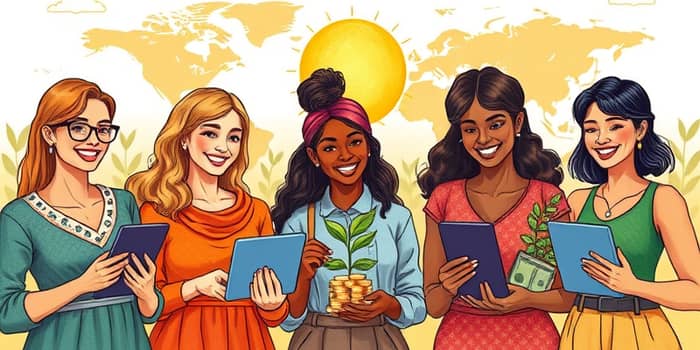
In a world where economic disparities persist, microfinance emerges as a beacon of hope, transforming lives through small-scale financial services. This powerful tool is not just about money; it's about unlocking potential and fostering dignity among the underserved.
By providing access to credit and savings, microfinance institutions empower individuals to break free from poverty cycles. The global impact is staggering, with billions invested annually.
From rural villages to urban centers, stories of success echo, demonstrating how small loans can ignite big dreams. This article delves into the dynamics, challenges, and triumphs of this movement.
The global microfinance market is experiencing robust expansion, reflecting its critical role in economic development. In 2024, valuations ranged between USD 217.5 billion and USD 260.91 billion, showcasing diverse forecasting approaches.
Projections indicate sustained growth, with estimates soaring to USD 640.84 billion by 2033. This trajectory is driven by increasing demand and innovative solutions.
Historical data reveals a compound annual growth rate (CAGR) of 14.8% between 2020 and 2026, underscoring rapid adoption. Future forecasts vary, but all point upward.
These numbers highlight a sector poised for transformative impact, fueling global economic inclusion.
Microfinance's reach is global, but certain regions dominate the landscape. Asia-Pacific stands out as the largest regional market, accounting for 42.5% of global activity.
Within this region, India holds the largest microfinance market globally, followed by Bangladesh. China is expected to be the fastest-growing, with a CAGR of 13.6%.
Other key markets include North America and Europe, with Germany, the UK, and Switzerland as major contributors. Emerging economies like Brazil and Indonesia also play significant roles.
This geographic spread ensures that microfinance touches diverse cultures and economies, adapting to local needs.
Microcredit remains the dominant service, holding the highest market share in 2024. It addresses credit gaps and leverages digital platforms for wider access.
However, the sector is diversifying. Services now include micro-savings, micro-insurance, and remittance options, catering to comprehensive financial needs.
This evolution supports holistic empowerment, moving beyond mere loans to build financial resilience.
Over 7,000 microfinance institutions operate globally, serving nearly 16 million low-income people. This network is a testament to the sector's scalability and commitment.
New institutions continue to emerge, expanding reach into remote areas. This growth is fueled by partnerships and technological advancements.
The table below summarizes key regional market projections:
This infrastructure ensures that microfinance is not a niche but a mainstream force for change.
Microfinance programs have substantially improved family incomes and promoted entrepreneurship, especially among women. Research shows significant gains in financial independence.
For women, empowerment is multifaceted. It enhances control over income spending and decision-making power within households. Studies indicate a 33% increase in financial control for moderate borrowers.
Quantified success stories, like the BBVA Microfinance Foundation helping 70% of customers rise above poverty, illustrate real-world impact.
Despite progress, obstacles remain. Limited collateral and lack of financial literacy hinder access for many. Cultural norms and high interest rates also pose challenges.
Globally, 1.4 billion people lack bank accounts, highlighting the scale of exclusion. Addressing these issues requires targeted interventions and policy support.
Overcoming these barriers is crucial for maximizing microfinance's potential and ensuring inclusive growth.
Digital transformation is a key driver, with digital lending platforms expanding access and lowering barriers. Technology enables personalized services for diverse needs.
Financial literacy programs enhance program efficacy, while government initiatives, like India's underbanked population programs, foster inclusion. Support for small businesses fuels entrepreneurial growth.
These strategies ensure that microfinance adapts to evolving demands, driving sustainable empowerment.
Microfinance primarily serves low-income and overlooked sections of society, including rural populations and women-led ventures. Youth in developing countries with entrepreneurial aspirations are key beneficiaries.
Small enterprises represent a fast-growing segment, supported by increasing entrepreneurial activity. This focus ensures that growth is inclusive and transformative.
By targeting these groups, microfinance catalyzes broad-based economic development.
Peer-reviewed studies and institutional analyses provide robust evidence of impact. Randomized controlled trials and longitudinal studies track changes in empowerment dimensions.
For example, research with 27 individuals across programs highlights qualitative improvements, while surveys measure outcomes like increased mobility and community participation.
This evidence base reinforces microfinance's credibility, guiding future innovations and investments for greater social good.
In conclusion, global microfinance is more than an investment; it's a movement towards economic justice. By embracing challenges and leveraging solutions, we can build a world where every individual has the tools to thrive.
References