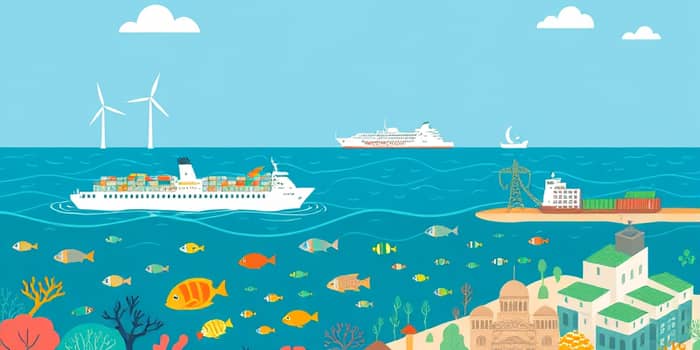
The ocean is not just a vast body of water; it's a dynamic economic frontier with immense potential for sustainable growth and investment.
Covering over 70% of our planet, it drives global prosperity through food, energy, trade, and climate regulation.
Often referred to as the **blue economy**, this concept emphasizes the **sustainable use of ocean resources** to balance economic value with ecosystem health.
As climate change and biodiversity loss accelerate, investing in this blue frontier is no longer optional—it's a critical pathway to resilience and innovation.
The blue economy is defined by organizations like the World Bank as the sustainable use, restoration, and stewardship of ocean and coastal resources.
It aims to generate economic value while preserving ecosystem integrity for future generations.
This approach shifts focus from exploitation to regeneration, ensuring long-term viability.
Key elements include:
By integrating these sectors, we can unlock new opportunities while mitigating risks.
Over half of global GDP, estimated at **USD 44 trillion**, depends moderately or highly on nature's services, including oceans.
This dependence exposes markets to systemic risks from climate change, pollution, and biodiversity loss.
For instance, ocean acidification has crossed planetary boundaries, threatening marine life and coastal communities.
Investors must recognize these **long-term physical and transition risks** in supply chains and infrastructure.
Proactive investment in sustainable solutions can mitigate these threats and foster resilience.
Opportunities abound in:
This strategic shift is essential for safeguarding our economic and environmental future.
The ocean economy is powered by diverse sectors, each offering unique investment narratives and growth potential.
From traditional industries to emerging innovations, these areas are pivotal for a sustainable blue frontier.
Here are the major sectors:
Each sector requires tailored investment strategies to balance profit with planetary health.
The ocean economy is valued at approximately **USD 2.2 trillion annually** in output, representing 3–4% of global GDP.
Projections indicate rapid growth, with the market expected to reach **USD 3.78 trillion by 2034**, driven by innovation and sustainability.
Employment is substantial, supporting at least 133 million formal jobs, with potential for up to 184 million by 2050 through sustainable practices.
Regional patterns highlight diverse opportunities:
Understanding these dynamics helps investors target high-impact regions and sectors.
This table summarizes the **interconnected opportunities** across sectors, guiding informed investment decisions.
A regenerative ocean economy goes beyond sustainability to actively restore and enhance marine ecosystems.
It aligns with the World Economic Forum's vision, where nature-positive models could unlock **USD 10.1 trillion in annual opportunities** globally.
Key principles include:
By adopting these strategies, we can transform risks into **resilient economic growth**.
For investors, the blue frontier offers tangible avenues to drive positive change while achieving returns.
Start by assessing portfolios for exposure to ocean-related risks and opportunities.
Focus on high-growth areas like sustainable aquaculture, where demand is rising with **global seafood consumption**.
Consider these practical steps:
Collaboration across sectors is crucial to scale solutions and mitigate systemic risks.
Investing in the ocean economy is not just about financial gain; it's a commitment to a healthier planet and prosperous future.
By prioritizing sustainability, we can harness the **immense potential of our oceans** while addressing pressing global challenges.
Every dollar invested in the blue frontier contributes to job creation, climate resilience, and biodiversity conservation.
Let's seize this opportunity to build a regenerative economy that thrives in harmony with nature.
References