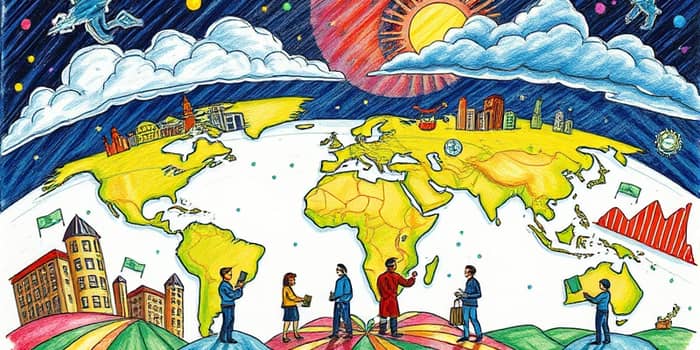
The world economy stands at a pivotal moment, navigating a labyrinth of recovery that is both inspiring and daunting.
As nations strive to rebuild, the path forward is marked by **fragile and uneven progress**, challenging our collective resilience and innovation.
This article offers a detailed exploration of current trends, aiming to empower you with insights and practical strategies for thriving in this new era.
The Big Picture: A Recovery in Slow Motion
Global growth projections reveal a complex narrative of cautious optimism overshadowed by historical benchmarks.
Key institutions paint varying pictures, from tepid rebounds to sturdy resilience, shaping how we perceive the future.
- UNCTAD estimates world growth at **2.6% in 2025 and 2026**, significantly below pre-pandemic averages.
- The United Nations highlights output growth of 2.7%, underscoring the **sub‑par nature of the rebound**.
- In contrast, Goldman Sachs projects 2.8% growth in 2026, suggesting a narrative of **unexpected durability**.
This divergence in forecasts creates a tension between pessimism and hope, urging us to look deeper.
Recovery is ongoing but remains **vulnerable to multiple shocks**, from debt crises to geopolitical tensions.
Growth proves more resilient than many feared, yet it falls short of ambitious global development goals.
Regional Snapshots: Winners, Laggards, and Wildcards
Examining regional dynamics reveals stark contrasts, with some areas surging ahead while others struggle to keep pace.
Understanding these disparities is crucial for crafting effective responses and fostering inclusive growth.
United States: A Beacon of Resilience
The U.S. economy shows signs of robust recovery, driven by key sectors and policy measures.
- Growth forecasts range from 1.5% to 2.6% in 2026, with **consumer spending and business investment** as primary engines.
- Tax cuts and AI-related investments provide significant boosts, injecting optimism into the market.
- However, risks like tariffs and labor market slowdowns pose persistent threats to sustained progress.
Policy support, including Fed rate cuts, offers a tailwind, but fiscal sustainability concerns loom large.
Euro Area: Navigating Headwinds
Europe's recovery is more subdued, grappling with external pressures and internal challenges.
- Projected growth around 1.3% to 1.4% in 2026, supported by private consumption and wage gains.
- Strong performances in countries like Germany and Spain highlight regional bright spots.
- Yet, US tariffs and China's economic spillovers create significant drags on exports and investment.
The labor market remains a stabilizing force, but political uncertainty adds to the complexity.
China: Export Strength Amid Domestic Weakness
China's economy continues to grow, but at a slower pace, with imbalances shaping its trajectory.
- Growth forecasts of 4.5% to 4.8% in 2026 reflect strong manufacturing and exports.
- However, sluggish domestic demand and overcapacity sectors signal deeper structural adjustments.
- China's rising current account surplus, potentially reaching 1% of global GDP, impacts global competitors.
This dynamic underscores the interconnectedness of recovery efforts worldwide.
India and South Asia: A Bright Spot
India emerges as a leader in post-pandemic growth, showcasing the power of domestic initiatives.
- With growth rates up to 8% driven by private consumption and public investment, it stands out globally.
- South Asia overall benefits, with regional growth around 5.6%, fueled by India's momentum.
- Challenges include sustaining job creation and managing inflation, but the outlook remains promising.
This success story offers lessons in resilience and strategic planning.
Latin America and Africa: Facing Uphill Battles
These regions confront significant hurdles, from debt burdens to climate vulnerabilities.
- Latin America sees modest gains, with countries like Argentina rebounding through fiscal reforms.
- Africa's growth is hampered by debt distress and climate shocks, threatening development targets.
- Both areas highlight the need for targeted support and global cooperation to bridge gaps.
Addressing these issues is essential for a more equitable recovery.
Key Drivers and Risks Shaping the Future
Identifying the forces at play helps us navigate uncertainties and seize opportunities for growth.
Drivers like technological innovation and policy support offer pathways to accelerated recovery.
- AI and digital transformation are **revolutionizing industries** and boosting productivity globally.
- Expansionary fiscal policies, such as infrastructure spending, provide critical stimulus in key regions.
- Consumer resilience, fueled by wage gains and lower inflation, sustains demand in many economies.
Conversely, risks demand vigilant management to prevent setbacks.
- Geopolitical tensions and trade disputes, including tariffs, create **volatility in global markets**.
- Climate shocks and debt sustainability issues threaten to derail progress, especially in vulnerable areas.
- Labor market imbalances and inflationary pressures require careful policy calibration to maintain stability.
Balancing these elements is key to fostering a robust and inclusive economic environment.
Practical Insights for Moving Forward
Empowering individuals and organizations with actionable strategies can turn challenges into catalysts for growth.
Embrace adaptability and innovation to thrive in this evolving landscape.
- Diversify investments and supply chains to mitigate risks from regional disparities and geopolitical shocks.
- Leverage technology, such as AI and digitization, to enhance efficiency and **drive sustainable growth**.
- Advocate for policies that support debt relief and climate resilience, fostering global cooperation.
Focus on building resilient communities and businesses that can weather uncertainties.
- Invest in education and skills development to prepare for the jobs of the future, especially in tech-driven sectors.
- Promote inclusive economic practices that address inequality and ensure no one is left behind in the recovery.
- Monitor economic indicators closely, using data to make informed decisions and adapt strategies swiftly.
By taking proactive steps, we can contribute to a more stable and prosperous world.
Conclusion: Charting a Path to Inclusive Growth
The post-pandemic recovery is a testament to human resilience, yet it calls for renewed commitment and collaboration.
As we navigate this **complex and uneven journey**, let us draw inspiration from successes and learn from setbacks.
Together, by embracing innovation, fostering cooperation, and prioritizing equity, we can build a future where economic recovery benefits all, turning today's vulnerabilities into tomorrow's strengths.