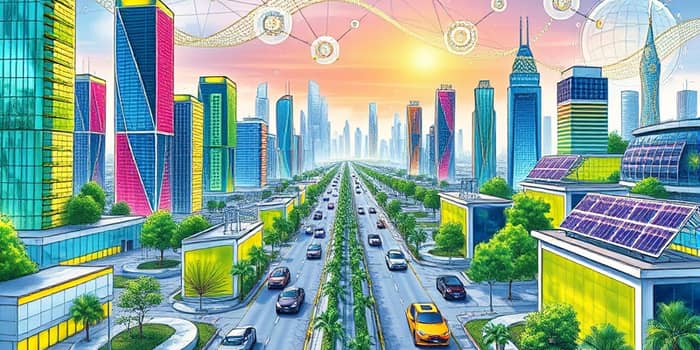
Imagine urban landscapes transformed by digital technologies and connected infrastructure to enhance daily life.
Smart cities are not just a futuristic concept but a reality shaping our world today.
They leverage data and innovation to tackle pressing urban challenges.
This movement is creating vast opportunities for investors and citizens alike.
At their core, smart cities integrate advanced technologies into urban systems.
They use ICT, IoT sensors, and AI to optimize operations and improve sustainability.
This integration aims to allocate resources efficiently and enhance citizen well-being.
Key functional domains covered include:
These elements work together to create resilient and livable urban environments.
The global smart cities market is experiencing explosive growth.
Projections vary due to different definitions, but all point to a booming sector.
For instance, MarketsandMarkets estimates the market at USD 699.7 billion in 2025.
It is projected to reach USD 1,445.6 billion by 2030.
Precedence Research offers even higher figures, with potential for massive expansion.
This growth is driven by increasing investments and technological advancements.
The economic impact could reach trillions, making this a key investment theme.
Several macro trends are accelerating the adoption of smart city solutions.
Rapid urbanization is a primary driver, with more people moving to cities.
By 2050, nearly 70% of the global population will live in urban areas.
This puts pressure on infrastructure, demanding sustainable and efficient systems.
Technology advancements are lowering barriers to deployment.
Policy initiatives also play a crucial role in driving investments.
Governments are using public-private partnerships to finance projects.
National strategies focus on digital transformation and climate goals.
These factors combine to create a robust growth environment.
Smart cities encompass diverse applications, each with significant potential.
Smart transportation is the largest segment, accounting for 21% of revenue in 2024.
It includes intelligent transportation systems and EV infrastructure.
Public safety and surveillance are also dominant, driven by security needs.
Environmental solutions are projected to grow rapidly, with a CAGR of 28.7%.
This segment addresses air quality and waste management.
Investors can target these segments based on growth rates and innovation.
Different regions offer unique opportunities in the smart city space.
North America currently holds the largest market share, at 33% in 2024.
It benefits from mature technology adoption and strong infrastructure.
Asia-Pacific is the fastest-growing region, with a CAGR of 27.9%+.
Governments here are heavily investing in digital and green initiatives.
This regional diversity allows for strategic investment across the globe.
Looking ahead, smart cities will continue to evolve with emerging technologies.
Trends like AI-driven automation and IoT expansion will shape future developments.
Citizen engagement through digital platforms will enhance governance.
Investment in green infrastructure will address climate risks effectively.
Key areas to watch include:
By embracing innovation, cities can become more resilient and inclusive.
For investors, this represents a chance to support transformative urban projects.
Smart cities are not just about technology but about improving human lives.
They offer a pathway to sustainable growth and enhanced quality of life.
Engaging with this theme can yield significant returns and positive impact.
References