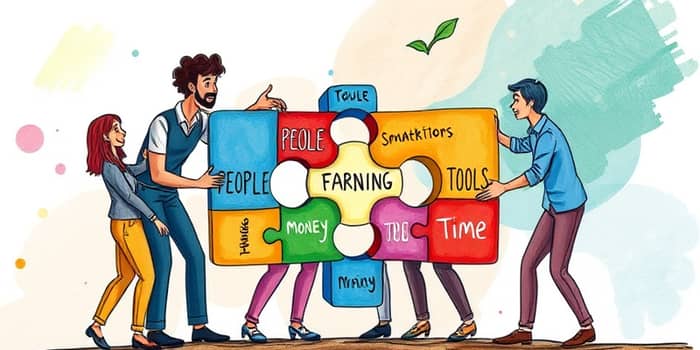
In today’s rapidly evolving business world, organizations face the constant challenge of doing more with less. Strategic resource management rises to the occasion by guiding leaders to allocate human, financial, and material resources in ways that drive both immediate wins and sustained success. When done well, this discipline becomes the catalyst for growth, innovation, and resilience, aligning the workforce with objectives across every layer of the enterprise.
At its core, strategic resource management is about foresight. It requires decision-makers to anticipate changing market conditions, human capacity shifts, and budgetary constraints. By building a clear roadmap, companies can ensure that every resource—whether it’s a specialist engineer, a critical software license, or a piece of test equipment—is deployed where it delivers the highest impact.
Strategic resource management is more than mere scheduling or cost cutting. It is a comprehensive process that begins well before project kickoff. During the planning phase, teams conduct a thorough resource assessment, defining the people, tools, and capital needed to achieve strategic change objectives. By establishing SMART goals—specific, measurable, attainable, relevant, and time-bound—leaders lay the groundwork for measurable success and continuous improvement.
This approach shifts resource planning from reactive firefighting to proactive orchestration. Organizations gain the power to forecast billable versus non-billable work, identify redundant efforts, and channel energies toward high-value activities. Such foresight not only drives efficiency but also fosters a culture of empowerment, where team members feel their skills are recognized and their contributions valued.
When executed effectively, strategic resource management delivers a host of organizational advantages. Companies can:
Employees also reap significant rewards. By matching individual strengths and interests with project demands, organizations nurture a sense of purpose and clarity. Clear performance metrics—providing clear metrics and evaluation processes—ensure fair reviews and constructive feedback, fueling professional growth and retention.
Creating a strategic resource management practice requires structured steps that guide planning, allocation, and governance. Key actions include:
Integrating agile principles further elevates the approach. By reviewing allocation in sprint cycles, teams can adapt to shifting priorities, ensuring that no resource remains idle or overextended. This flexibility underpins a sustainable pace of work and continuous delivery of value.
No strategy is complete without rigorous monitoring. Tracking key performance indicators reveals trends and uncovers hidden bottlenecks. Modern BI dashboards bring these insights to life, using real-time BI dashboards that highlight inefficiencies and emerging risks before they escalate.
Equally important is risk management. Early identification of potential disruptions—staff turnover, vendor delays, or budget cuts—allows teams to enact contingency plans. By cross-training employees, securing backup suppliers, and modeling allocation scenarios, organizations minimize downtime and preserve momentum.
Culture is the invisible force that sustains strategic resource management. When teams celebrate small wins and share knowledge openly, silos dissolve and innovation flourishes. Practical steps to strengthen this culture include:
By embedding accountability into everyday routines—through dashboards, stand-ups, and clear ownership—organizations build trust and ensure that every resource drives toward common goals.
Strategic resource management is not a one-time project but a dynamic journey. It demands continuous reflection, adaptation, and a commitment to working smarter rather than harder. As leaders refine their processes, they unlock unprecedented levels of efficiency, resilience, and engagement.
Ultimately, the power of strategic resource management lies in its ability to turn constraints into catalysts. By viewing capacity limitations not as barriers but as opportunities for creativity, organizations chart paths to sustainable growth and innovation. Every resource becomes a strategic asset, every decision a step toward a more agile future.
Begin today by taking stock of your resources, aligning them with clear objectives, and nurturing a culture that values collaboration. With each iteration, your organization will grow stronger, your people more invested, and your outcomes more remarkable. Embrace this framework, and you will transform not only how you use assets, but also how you envision success.
References