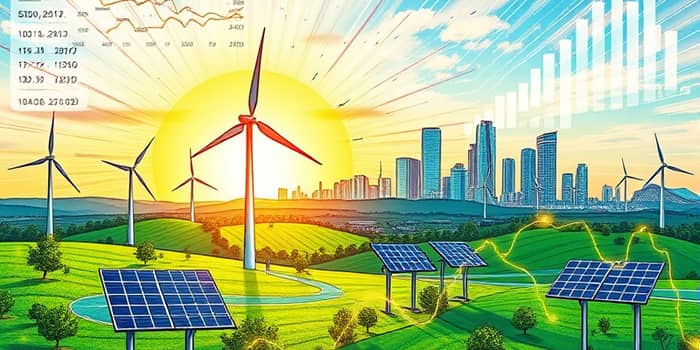
In a world facing unprecedented environmental challenges, the need for capital to flow into sustainable activities has never been more urgent. Rising carbon emissions, extreme weather events, and biodiversity loss demand decisive action. At the same time, technological advances are reshaping the financial industry, offering powerful tools to channel investments toward greener outcomes. Sustainable finance tech sits at the intersection of these forces, merging the rigor of finance with the promise of digital innovation to address ecological crises.
Investors, policymakers, and entrepreneurs are increasingly recognizing that profitability and sustainability are not mutually exclusive. By harnessing data analytics, blockchain, artificial intelligence, and automation, the sustainable finance ecosystem can achieve unprecedented scale and transparency. From automated ESG assessments to tokenized carbon credits, technology is unlocking new pathways for capital deployment, risk management, and stakeholder engagement.
At its core, sustainable finance integrates environmental, social, and governance (ESG) criteria into investment decisions, ensuring that capital supports activities aligned with long-term planetary health. The European Union defines sustainable finance as taking ESG considerations into account to drive investments toward sustainable economic activities and projects. Harvard researchers similarly emphasize that sustainable finance decisions weigh ESG factors alongside traditional risk–return metrics.
However, definitions alone cannot capture the diversity of this field. Policymakers, rating agencies, and standards bodies continue to refine taxonomies and disclosure requirements. Robust, interoperable data is essential to compare issuers, measure progress, and prevent greenwashing. Technology solutions—from API-based data feeds to automated compliance tools—play a pivotal role in bridging regulatory frameworks and market needs.
Global markets are responding to the sustainability imperative. According to LSEG, the green economy market cap reached US$7.9 trillion in Q1 2025, representing 8.6% of global listed equities. Revenues from green products and services exceeded US$5 trillion in 2024, more than doubling a decade earlier. With a 15% compound annual growth rate (CAGR) from 2014 to 2024, the green sector stands as one of the fastest-growing market segments.
Nevertheless, the task ahead remains formidable. To achieve the Paris Agreement goals, cumulative climate investments between US$109 trillion and US$275 trillion will be required by 2050. The United States alone invested US$279 billion over the past year in clean energy, clean transportation, building electrification, and carbon management—a 6% year-on-year increase. Utility-scale solar and storage accounted for over 90% of that figure, while emerging climate technologies such as clean hydrogen and sustainable aviation fuels also saw rising allocations.
The sustainable finance toolbox has expanded rapidly. Green bonds, introduced over a decade ago, now boast US$2.9 trillion in outstanding issuance. Sustainability-linked bonds and loans tie borrowers’ costs to achieving predefined ESG targets, incentivizing progress in sectors traditionally seen as hard to abate.
Fintech platforms amplify these innovations by offering scale, speed, transparency, data, and inclusion to issuers and investors alike. Digital interfaces now provide real-time ESG scoring and reporting, while blockchain networks underpin secure carbon credit registries. AI-driven climate risk models simulate extreme weather scenarios, informing asset allocation and insurance underwriting decisions. This convergence of finance and technology is not theoretical—it is actively reshaping capital markets, driving cost efficiencies, and democratizing access for retail and institutional investors globally.
One persistent misconception is that sustainability compromises returns. In practice, green economy equities have achieved a five-year annualized return of 5.6% since 2020, outperforming traditional benchmarks by 59% since 2008. Analysis shows that 54% of all 12-month periods and 70% of all five-year periods favored green investments. These results underscore that integrating ESG does not require sacrificing performance; it can enhance resilience against climate-related risks.
Private markets dedicated to low-carbon solutions exhibited even stronger growth, with 123% cumulative five-year gains versus 57% in public markets. In the first half of 2025, sustainable funds recorded a median return of 12.5%, outperforming traditional funds’ 9.2%. This trend demonstrates that sustainability and profitability can go hand in hand, generating both financial returns and long-term value for communities and the planet.
Looking ahead, market participants are prioritizing several emerging themes. Transition finance mechanisms continue to gain traction, especially in high-emitting sectors moving towards Paris alignment. Nature-based solutions are attracting capital to biodiversity and water projects. Resilience finance, including parametric insurance and resilience bonds, addresses the increasing frequency of natural disasters. Meanwhile, carbon pricing reforms and evolving carbon markets create fresh opportunities for emissions reductions.
These trends reflect a maturing landscape where sustainable finance is becoming mainstream. Technologists and investors who embrace these developments can capture growth while delivering environmental and social benefits. Collaboration across public and private sectors, supported by robust data infrastructures, will be critical to scale solutions rapidly and equitably.
To navigate this evolving ecosystem, stakeholders should adopt a strategic framework: perform rigorous ESG due diligence, leverage digital platforms for data-driven insights, set transparent interim targets, and diversify across instruments and geographies. By aligning financial goals with environmental imperatives, the sustainable finance community can mobilize the trillions needed to drive a low-carbon transition.
In conclusion, the fusion of green capital flows and digital innovation offers a compelling vision for sustainable prosperity. Through the strategic application of technology and finance, we can unlock new sources of growth, mitigate climate risk, and create lasting value for current and future generations. The time to act is now—to invest boldly, innovate relentlessly, and collaborate across disciplines in service of a healthier, more resilient planet.
References