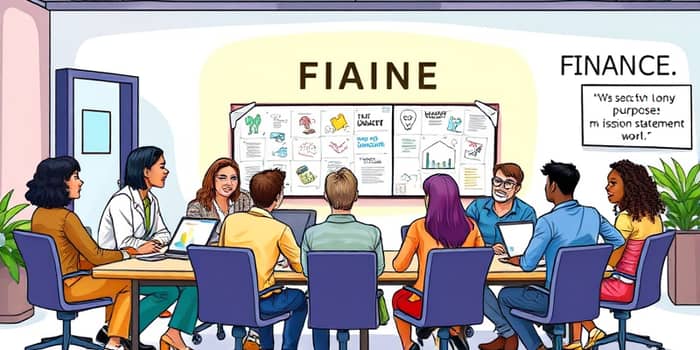
In the high-stakes world of finance, where pressure and competition are constants, creating a culture that fosters peak performance is not just beneficial—it is essential.
Daniel Coyle's "The Culture Code" reveals that success stems from relationships, not just intelligence or skills, and this principle is powerfully applicable to trading floors and investment teams.
Drawing from four years of research, Coyle identifies three core skills that transform groups into cohesive, high-performing units, which can drive innovation and stability in financial environments.
This article will explore how to apply these principles practically, helping you cultivate a team that thrives under pressure and achieves sustainable growth.
By focusing on psychological safety and trust, you can move beyond traditional models to unlock unprecedented success in finance.
Psychological safety is the belief that one will not be punished for speaking up, which is crucial in finance for risk management and error prevention.
Coyle emphasizes using belonging cues to build this safety over time, with strategies tailored to financial settings.
Key belonging cues include investing energy in interactions, treating team members as unique, and signaling ongoing relationships.
In finance, this might involve redesigning workspaces to encourage collaboration or implementing communication tips during onboarding.
For example, the San Antonio Spurs improved staff retention by focusing on these cues, and similar approaches can reduce costly turnover in financial firms.
By prioritizing safety, teams can create an environment where ideas flow freely and mistakes are seen as learning opportunities.
Vulnerability is not a weakness but a strength that builds trust and cooperation, essential in volatile financial markets.
Coyle describes the vulnerability loop, where signaling need for help and reciprocating creates shared mental models.
Studies show that vulnerability increases cooperation, while power and invulnerability decrease it, making candor vital for decision-making.
In finance, fostering vulnerability can lead to better risk assessment and innovative solutions during market fluctuations.
Examples from U.S. Navy SEALs and Pixar demonstrate how vulnerability enhances performance, adaptable to trading teams for improved outcomes.
This approach encourages honest feedback and reduces the fear of failure, which is critical in high-pressure financial roles.
A clear purpose reinforces shared values and direction, moving teams beyond paychecks to focus on collective achievements.
Coyle suggests using stories, language, and behaviors to embed purpose, which in finance can tie metrics to client trust and long-term value.
For instance, Johnson & Johnson's credo prioritizes customer safety, a model that financial firms can adapt for ethical decision-making.
Zappos and Danny Meyer's restaurants are prime examples of high-purpose environments that drive engagement and performance.
In finance, establishing purpose helps teams navigate challenges with a unified vision, enhancing motivation and resilience.
To bring these concepts to life, here are actionable strategies tailored for financial settings, designed to foster a high-performing culture.
Remember, culture is a continuous process that requires ongoing refinement and strong, empathetic leadership to sustain.
To underscore the importance of these skills, consider the following data and findings, which highlight the impact of culture on organizational success.
This table illustrates how critical culture is to performance, especially in high-pressure fields like finance, where every decision counts.
Synthesizing Coyle's insights, here are the top takeaways to implement immediately for transforming your team's dynamics and achieving peak performance.
By embracing these principles, finance teams can transform their dynamics, leading to peak performance and sustainable success in a competitive industry.
In conclusion, applying "The Culture Code" to finance is not just about improving metrics; it is about creating an environment where people feel safe, connected, and driven by a common purpose.
Start today by implementing one small change, such as a weekly vulnerability session or a purpose-alignment meeting, and watch as your team's cohesion and performance soar to new heights.
With commitment to building safety, sharing vulnerability, and establishing purpose, you can unlock the full potential of your finance team and navigate the complexities of the market with confidence and agility.
References