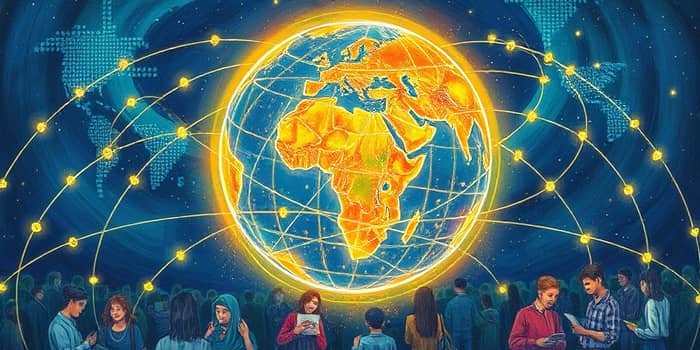
In an era defined by lightning-fast communication and advanced technologies, a stark reality lingers: billions remain disconnected. The digital divide is not just a technological gap—it shapes the future of economies, education, healthcare, and social inclusion worldwide.
The term "digital divide" captures the disparity between those with reliable access to information and communication technologies (ICT) and those without. It is a complex interplay of technological inefficiencies and socio-economic barriers that restrict access to high-speed internet, modern infrastructure, and essential digital skills.
At its core, this divide impacts opportunity. Communities lacking connectivity miss out on telemedicine, e-learning, remote work, and digital governance. This gap reinforces existing inequalities and stifles collective progress.
As of October 2025, there are 6.04 billion internet users, representing 73.2% of the global population. Yet, over 2.5 billion people remain offline—nearly a third of humanity. Of these, 627 million are classified as digitally excluded, lacking the means for meaningful connectivity and engagement.
Challenges extend beyond mere access. An estimated 219 million struggle with basic digital skills; 96 million face hurdles in digital ID verification due to physical or bureaucratic barriers; and more than 70 million are isolated by country-based restrictions.
Connectivity readiness varies dramatically by country. Switzerland tops the Digital Connectivity Index with a score of 34.41, fueled by robust infrastructure and strong policy support. By contrast, India lags at 8.59, hindered by vast rural populations, policy fragmentation, and limited investment capacity.
Africa and South Asia feature heavily among the lowest-ranked regions. Geographic obstacles, disaster risk, and weak power grids compound funding shortfalls. Even developed nations like the UK (ranked 12th) and the US (14th) grapple with device penetration gaps and resilience concerns.
Digital exclusion has real-world consequences. Inaccessible telehealth services can delay diagnoses; limited e-learning opportunities stunt educational advancement; and exclusion from financial services deepens poverty cycles. Globally, businesses risk missing out on $1.75 trillion in potential revenue by overlooking digitally marginalized consumers.
Furthermore, gender discrimination in technology use costs the global economy up to $12 trillion. When women and minorities are sidelined, the social fabric weakens and innovation suffers. Left unchecked, these trends threaten to widen existing gaps rather than close them.
Concrete numbers highlight the scale of the challenge. This table summarizes the most critical metrics driving policy and investment decisions:
Achieving universal, meaningful internet access by 2030 demands an unprecedented $2.6 to $2.8 trillion in investment. Funding must flow into both physical infrastructure and human capital, ensuring that networks are resilient, affordable, and inclusive.
The digital divide extends beyond cables and towers. Policy reform is critical to align digital access with broader development goals. Regulations must foster affordability, data privacy, and equitable service delivery.
Simultaneously, robust digital ID systems and advanced verification solutions can reduce exclusion caused by fraud fears and bureaucratic hurdles. Addressing AI biases and ensuring model transparency are vital to prevent new forms of discrimination.
Emerging technologies present both challenges and opportunities. Next-generation mobile networks (5G/6G) and edge computing demand higher data center densities and advanced power systems. Innovative cooling and energy solutions will be essential for sustainable growth.
Satellite-based internet is a game-changer for remote or politically sensitive regions. By bypassing terrain and border constraints, it can deliver reliable connectivity where terrestrial networks fail. Embracing a hybrid approach ensures redundancy and resilience.
Closing the digital divide is more than an infrastructure project—it is a moral and economic imperative. Investments made today will determine the shape of global society for decades to come.
By combining strategic funding, inclusive policies, and transformative technologies, we can bridge gaps, unlock human potential, and build a more equitable digital world. The time to act is now, and every stakeholder—governments, businesses, and communities—must play their part.
References