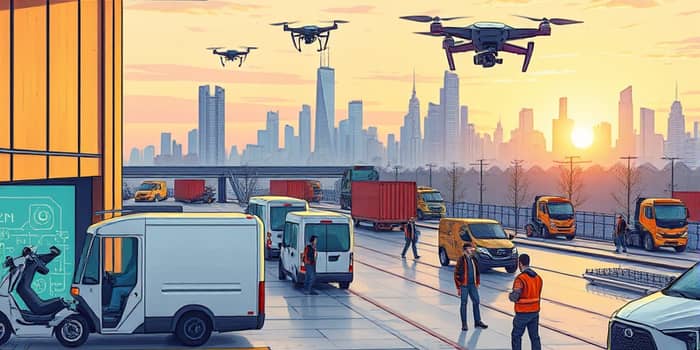
In an era defined by digital commerce and instant gratification, the global e-commerce logistics landscape is undergoing profound transformation. Companies large and small must adapt to soaring customer expectations, technological breakthroughs, and shifting trade patterns.
From hyperlocal deliveries to cross-border hubs, supply chains are being reinvented to offer speed, transparency, and sustainability. This article explores the forces reshaping logistics, practical strategies for businesses, and an inspirational roadmap for embracing change.
The e-commerce logistics market is on a remarkable growth trajectory, expected to expand by USD 1,870.3 million from 2026-2030 at a CAGR of 36.9%.
Valued at $527.9 billion in 2025 with a projected CAGR of 10.5% through 2035, this sector benefits from smartphone penetration, fast delivery demand, and supportive policies like India’s GST.
These figures underscore how online shopping proliferation and cross-border trade acceleration are rewriting the supply chain playbook.
Historically, supply chains were linear, but e-commerce demands have shifted them into agile digital networks. Customers expect 24-hour delivery, real-time tracking, and flexible pick-up options.
The COVID-19 pandemic expedited volatility: oat milk demand surged 305%, and digital order volumes exploded. Retailers like Amazon achieved 20% lower shipping costs through advanced optimization and automation.
Omnichannel fulfillment—buy-online-pickup-in-store and dynamic inventory sharing—helped mitigate the 30% volume spike, revealing the power of synchronizing digital and physical channels.
A new generation of technologies and models is redefining how goods move from factories to front doors.
These trends rely on a robust technology backbone: WMS, cloud platforms, IoT sensors, and blockchain for visibility. Collaboration between specialized providers creates end-to-end orchestration across fragmented networks.
Rapid expansion brings complexity. Cross-border regulations, automation capital costs, peak-season volatility, and urban density all strain logistics networks.
To overcome these hurdles, businesses should invest in a core unified technology stack combining WMS, order management, and digital control towers. Strategic partnerships with 3PL providers and carriers help distribute risk and expertise.
Workforce upskilling programs ensure teams can manage advanced robotics and AI tools, while sustainability initiatives—from EV fleets to recyclable packaging—enhance brand reputation and regulatory compliance.
APAC dominates growth, fueled by e-commerce giants investing in cold chain and automated warehouses. North America and Europe focus on optimizing last-mile networks and hyperlocal fulfillment. In emerging regions, infrastructure build-out remains critical for unlocking cross-border potential.
Sectors such as perishables, healthcare, and high-value electronics benefit from specialized services like cold chain logistics, digital customs platforms, and bonded warehousing, driving resilience and customer trust.
As we move beyond 2026, the convergence of personalization, sustainability, and risk management will define logistics excellence. AI-driven route optimization, fractionalized services, and digital freight matching will become standard.
Organizations must cultivate a culture of continuous innovation, embracing emerging technologies while aligning with ESG goals. By fostering cross-functional collaboration and data-driven decision-making, supply chains can become resilient and agile networks that delight customers and safeguard profitability.
Whether you are a startup shaping hyperlocal pickups or a global enterprise streamlining cross-border deliveries, now is the time to act. Invest in technology, forge strategic alliances, and champion sustainability. The future of e-commerce logistics awaits—and your journey to supply chain reinvention starts today.
References