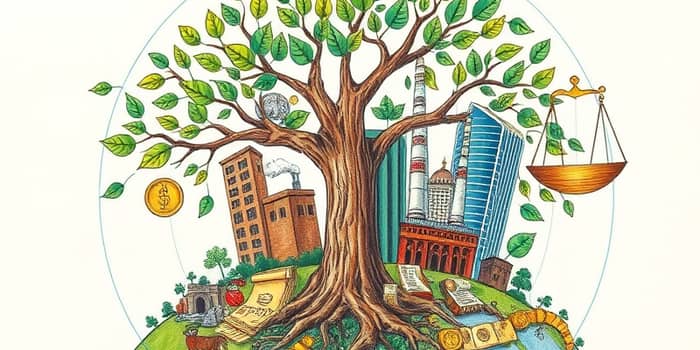
Since the dawn of organized societies, taxation has been central to state-building, public finance, and the social contract between governments and citizens. From humble beginnings levying land and livestock to modern digital levies, taxes have evolved in response to economic, political, and social transformations. Today, as globalization and climate change challenge existing frameworks, policymakers face crucial questions about equity, efficiency, and sustainability.
This article traces the centuries-long journey of taxes, examines the current global architecture, and explores forward-looking reforms that could reshape the next era of public finance.
In early-industrialized countries, tax revenues were <10% of national income before 1910, sufficient mainly for basic state functions such as order and property protection. After World War I, tax revenue as a share of national income more than doubled between 1920 and 1980, closely tracking the expansion of public spending on education, healthcare, and social protection.
By 1900, developed countries averaged around 9% of GDP in tax revenue, rising to about 20% by 1950. Today, sharp cross-country variation exists: some high-income welfare states collect tax revenue approaching or exceeding 40–45% of GDP, while many lower-income countries remain far below that mark.
Key structural changes over time include:
Early states in Mesopotamia, Egypt, and Greece taxed land, livestock, and trade rather than income. The Roman Empire developed a complex system featuring the Tributum on citizens, provincial levies, and one of the world’s first sales taxes under Julius Caesar. In Qing-era China, a land tax (dianshui) provided the primary revenue source, while medieval Europe saw feudal dues levied by monarchs, lords, and the Church, often tied to war finance and contested fiercely by the populace.
The first modern income tax is widely recognized as William Pitt the Younger’s 1799 levy in Britain, imposed temporarily to fund the Napoleonic Wars. Initially applied to incomes above £60 at about 1%, it was repealed in 1816 but reintroduced permanently in 1842 by Robert Peel with a more progressive structure.
In the United States, Civil War-era income taxes were temporary, but the modern system dates from the 16th Amendment of 1913. World Wars I and II spurred massive expansions in coverage and rates—during WWII, the top U.S. marginal rate exceeded 90%. The introduction of pay-as-you-earn withholding transformed income tax from an upper-class obligation into a mass tax collected at source.
By 1920, most developed European countries had adopted income taxes. After WWII and decolonization, many newly independent states modeled their systems on former colonial powers. Today, nearly all nations levy some form of income tax, with wide variations in progressivity, base inclusion, and exemption thresholds.
In the early 20th century, European countries expanded direct taxes—income, corporate, and payroll—more rapidly than other revenue sources. Top marginal rates on the highest incomes in rich countries rose from near zero around 1910 to peaks in the mid-20th century, only to be cut roughly in half after about 1980 amid deregulation and globalization pressures.
Consumption taxes also emerged as major revenue sources. Value-added tax (VAT) spread worldwide after WWII, and by the early 21st century most countries relied heavily on VAT or general sales taxes. Many of these levies began as temporary war-finance measures but became permanent fixtures of modern tax systems.
Meanwhile, the growth of pension systems, unemployment insurance, and health insurance led to large payroll and social security contributions. In some OECD countries, social contributions now rival or exceed income taxes as a share of total revenue, underpinning extensive welfare-state models.
OECD data from 1965 to 2007 show tax-to-GDP ratios mostly rising, with very few members remaining below the 1965 average by 2007. Nordic and Western European countries often exceed 40–45% of GDP in tax revenue, while a handful, such as Mexico and Turkey, remain below historical averages.
Tax capacity—the ability to administer and enforce taxes—correlates strongly with national income. Rich countries have historically found cheaper, more efficient ways to collect revenue, from standardized returns to professional tax administrations.
Post-WWII welfare states used progressive income taxation to finance social spending and redistribute income, helping to reduce inequality. In recent decades, debates over the top 1% and wealth concentration have revived interest in very high marginal rates, wealth and inheritance taxes, and capital gains levies.
International tax rules evolved around two core principles: source-based taxation (tax where income is earned) and residence-based taxation (tax where the taxpayer resides). Mechanisms to prevent double taxation—treaties and foreign tax credits—became essential as cross-border trade and investment expanded.
The digital economy challenges traditional nexus and profit allocation rules. Countries have introduced digital services taxes and sought multilateral solutions through the OECD’s BEPS 2.0 project, which includes a global minimum tax of at least 15% under Pillar Two to address base erosion and profit shifting.
Green taxation is gaining traction as policymakers aim to internalize environmental costs. Carbon pricing, plastic levies, and border adjustment mechanisms can drive investment in clean energy and reduce greenhouse gas emissions. Embedding environmental cost internalization into tax codes will be critical to meeting climate targets.
Global minimum tax measures promise to curb a “race to the bottom” in corporate taxation. By establishing a floor on effective tax rates, jurisdictions can protect their bases while cooperating to reduce harmful incentives. Successful implementation requires coordinated international cooperation and robust enforcement.
Finally, addressing inequality remains a core goal. New proposals for progressive wealth levies, higher inheritance taxes, and expanded capital gains rates offer tools to ensure that the benefits of growth are shared more broadly. Leveraging digital administration can enhance transparency and taxpayer compliance, bolstering trust in the tax system.
As we look to the future, the interplay of historical lessons and contemporary challenges underscores the need for balanced, forward-looking reforms. A resilient global tax architecture will harness technological innovation, environmental stewardship, and social equity to build systems that are efficient, fair, and sustainable for generations to come.
References