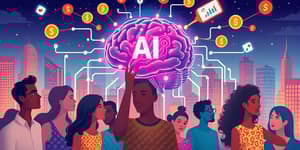
Auditing is undergoing a profound transformation as two powerful technologies converge to reshape the ways organizations ensure financial integrity and trust. This article explores how artificial intelligence and blockchain combine to drive unprecedented efficiency, transparency, and strategic insight in assurance.
From enhancing real-time detection of anomalies to redefining auditor roles, the future of audit promises a paradigm shift. Learn how these innovations overcome traditional limitations and pave the way for a new era of continuous assurance.
The traditional audit model—reliant on periodic sampling and manual checks—struggles to keep pace with today’s rapid, data-driven business environment. Organizations demand assurance that reflects the velocity of their transactions and the complexity of their operations. In response, audit professionals are embracing technologies that support real-time, continuous assurance models and unlock deeper insights than ever before.
By integrating AI’s analytical horsepower with blockchain’s data integrity guarantees, auditors can shift from retrospective reviews to proactive oversight, spotting emerging risks and anomalies as transactions occur. The result is a more responsive, reliable, and strategic audit function that aligns with modern expectations for timeliness and accuracy.
While AI and blockchain each bring distinct benefits, it is their synergy that truly transforms assurance. AI excels at pattern recognition, anomaly detection, and predictive modeling, whereas blockchain delivers a transparent, decentralized record of every transaction.
Together, these technologies create a robust framework for continuous monitoring, risk assessment, and fraud detection—laying the foundation for next-generation assurance services.
Automation in auditing extends beyond simple task execution. AI-driven systems can ingest terabytes of financial records, learn normal transaction behaviors, and flag deviations within seconds. This dramatic speed-up eliminates the historical reliance on random or judgmental sampling, enabling auditors to analyze every recorded entry.
Meanwhile, blockchain provides a single source of truth, where real-time updates to the ledger are immediately available for review. This reduces reconciliation delays and allows auditors to adopt a dynamic, ongoing audit planning process that adapts as new data emerges.
Detecting fraud has always been a core objective of auditing, yet deceptive practices often hide in plain sight within voluminous data sets. AI changes the game by offering predictive, pattern-based fraud detection, using advanced analytics to unearth subtle anomalies across multiple data modalities.
By combining AI’s detection prowess with blockchain’s inherent transparency, organizations can reduce potential fraud losses—estimated to save up to $160 billion in insurance claims by 2032—and strengthen stakeholder trust.
Transparency and integrity lie at the heart of any credible audit. Blockchain delivers a decentralized ledger, eliminating single points of failure and ensuring that no single party can manipulate records unnoticed. Auditors gain immediate access to authenticated, time-stamped entries, significantly improving the quality of evidence and reducing the need for manual corroboration.
With this foundation, auditors can produce comprehensive and reliable audit evidence that withstands increasing scrutiny from regulators, investors, and the public.
As technology automates routine tasks, auditors must shift their focus to strategic analysis, critical judgment, and advisory services. Proficiency in data analytics, machine learning, and distributed ledger technologies becomes essential. Continuous learning ensures professionals remain adept at interpreting AI outputs and validating blockchain records.
New specializations are emerging, ranging from cybersecurity assurance to environmental, social, and governance (ESG) reporting, each requiring auditors to balance domain knowledge with technical skills. By embracing these roles, audit teams can deliver higher value and strategic guidance to organizations navigating complex risks.
Despite its promise, adopting AI and blockchain in audit faces hurdles. Organizations must navigate regulatory and legal uncertainties, invest in talent development, and address potential cybersecurity threats. Stakeholders often hold divergent views on the benefits and risks of these technologies, influenced by varying levels of blockchain literacy and regulatory guidance.
The fusion of AI and blockchain is redefining audit from a periodic, retrospective exercise into a continuous, forward-looking assurance model. Organizations that harness these technologies position themselves at the forefront of transparency, efficiency, and strategic risk management.
By embracing innovation, investing in skills, and fostering collaboration among auditors, regulators, and technologists, the profession can realize a fast, accurate, precise audit operations paradigm. This transformation not only strengthens financial integrity but also builds lasting trust in an increasingly complex digital economy.
References