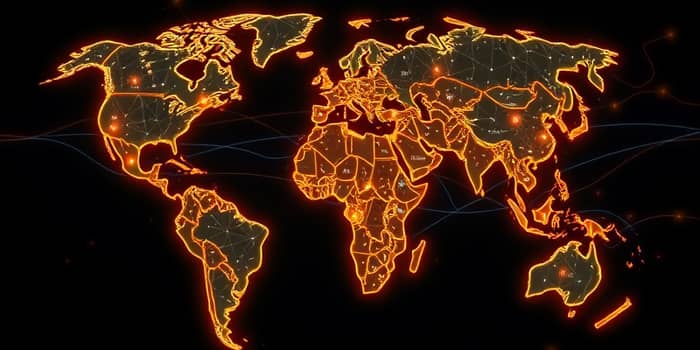
Data is rapidly ascending beyond mere information, evolving into a strategic resource in the global economy.
This transformation mirrors historical commodity cycles, reshaping power balances between nations and corporations alike.
For centuries, societies have relied on physical goods to fuel growth, from oil and metals powering industry to agricultural staples sustaining populations. Commodities are defined as basic, interchangeable items that can be traded on global exchanges under standardized contracts. Their uniform quality ensures seamless substitution and facilitates complex financial instruments like futures and options for hedging risk.
However, these assets are subject to pronounced price cycles shaped by long-term structural trends and shorter-term supply or demand shocks. Understanding these cycles is vital to appreciating how data may follow a similar trajectory.
On average, commodity price variability splits almost evenly between long-run and medium-run factors. For agriculture, 67% of price changes stem from permanent global activity trends, whereas industrial commodities like metals and energy see more than half of their swings driven by shorter-term supply and demand shocks. These insights empower policymakers and investors to tailor responses: permanent shocks often require structural reforms, while transitory ones benefit from targeted interventions like stockpiling or temporary tariffs.
Global trade in commodities remains a cornerstone of international finance, with futures markets in New York, London, and Shanghai enabling producers to hedge risk and consumers to lock in prices. Price hikes on import-dependent countries can spur inflation, prompting central banks to hike interest rates—a phenomenon well-documented during the early 2000s oil run-up. In contrast, oversupply can depress exporter revenues, increasing vulnerability to fiscal instability in emerging economies.
The history of commodity supercycles offers lessons for emerging data markets. Following World War II, unprecedented investments in energy and metals fueled decades of growth. In the 1970s, oil shocks drove prices skyward, triggering inflationary pressures and political realignments. More recently, the COVID-19 pandemic led to a sharper rebound in commodity prices than previous recessions, underlining the power of unprecedented global demand shocks.
Between 1970 and 2021, energy price variance attributable to a common global factor rose to 18%, highlighting increasing synchronization across markets. This trend parallels how digital networks connect economies more tightly than ever, amplifying the impact of disruptions and demand surges. Just as agricultural cycles responded to irreversible investments in tree crops, data infrastructure investments—such as undersea fiber and hyperscale data centers—represent durable commitments shaping long-term supply dynamics.
During the COVID-19 crisis, supply chain bottlenecks and shifting consumption patterns unleashed unprecedented imbalances. Industrial commodity prices decoupled briefly from traditional cycles, only to rebound more forcefully once restrictions eased. This episode underscores how rapid shifts in demand, coupled with logistical constraints, can override established patterns—offering a cautionary tale for data markets, where sudden regulatory clampdowns or massive platform outages could have parallel effects.
Data shares several hallmark traits with traditional commodities, prompting its emergence as a raw material for modern economies:
Standardized contracts and pricing mechanisms are just beginning to appear. As markets mature, one can anticipate futures or options contracts to hedge against fluctuations in data licensing fees and valuation volatility, mirroring the evolution of traditional commodity financial instruments.
Monetization of data has accelerated through subscription models, licensing agreements, and data-as-a-service offerings. Estimates suggest the global data economy could surpass $12 trillion by 2025, rivaling the GDP of major nations. Cloud service providers capture a significant share of value by offering storage, processing, and analytics tools, effectively positioning themselves as gatekeepers in the emerging data supply chain. Yet, lack of price transparency and metrics for quality remain stumbling blocks.
To standardize quality, industry groups propose data grading systems akin to commodity quality grades. Factors may include timeliness, accuracy, completeness, and sourcing transparency. Such frameworks aim to reduce asymmetries between sellers and buyers, fostering trust and market liquidity.
Just as nations have wielded energy and metal exports as levers of power, states today deploy economic tools to control data flows:
Key incidents illustrate data’s geopolitical stakes: the 2020 TikTok ban debates highlighted fears over foreign access to personal data, while the EU’s Digital Services Act aims to curb the market power of dominant platforms. Regions like Africa and Latin America seek to establish local data centers to retain value and spur domestic innovation, yet face capital constraints and technical barriers. These strategies reflect emerging data sovereignty movements worldwide, challenging unilateral norms.
The rise of data as a tradable commodity carries inherent risks and consequences:
First, price volatility may mirror energy market swings. Sudden regulatory changes or security breaches can disrupt supply, triggering rapid swings in data licensing costs and valuations.
Second, inequalities may deepen as resource-rich nations or corporations capture disproportionate value—echoing the commodity curse in oil-rich countries. Emerging economies may become data providers without reaping downstream benefits of analytics, AI development, or platform monetization.
Third, global interdependence on data can create systemic vulnerabilities. Just as disruptions in oil supply can stall entire sectors, major data center outages or cyberattacks can paralyze industries and public services.
Environmental concerns also emerge as data becomes commodity. Massive data centers consume vast amounts of energy, driving up carbon footprints. The race to build infrastructure parallels the 19th-century scramble for oil fields, with nations competing to host green or conventional data hubs. Balancing growth with sustainability will be critical to avoid replicating the ecological externalities of past resource booms.
Moreover, data privacy breaches can trigger cascading economic losses. According to one estimate, a severe global cyber event could cost trillions in lost output, disrupting supply chains and undermining consumer confidence. In this context, cyber resilience becomes a core economic policy tool, just as stockpiles and strategic reserves once were for physical commodities.
Looking ahead, several trends suggest the onset of a data-driven supercycle:
Moreover, the concept of transitory versus permanent cycles offers valuable perspective. A transient spike in data demand may arise from a temporary AI fad, but a deeper, multi-decade structural shift—akin to the energy supercycle of the 2000s—could redefine economic geography. Nations that cultivate domestic data ecosystems, invest in digital skills, and negotiate fair international agreements will likely emerge as winners in this unfolding epoch.
Looking ahead, integration of blockchain technologies promises more transparent and secure data exchanges. Smart contracts could automate licensing and enforce usage terms, reducing transaction costs. However, widespread adoption requires interoperability standards and shared governance structures—an arena ripe for geopolitical contention as countries vie to set the rules of the digital road.
In conclusion, treating data as a new global commodity compels us to rethink economic strategy in the digital age. We stand at the cusp of a transformation where bits become as consequential as barrels of oil or tons of copper. Navigating this terrain demands foresight, collaboration, and a commitment to equitable governance. By embracing the lessons of the past and innovating for the future, we can forge a world where data-driven prosperity uplifts all communities.
Successfully navigating the geopolitics of data demands multi-stakeholder collaboration. International organizations may need to broker agreements akin to oil cartel frameworks or maritime treaties, balancing market efficiency with national interests. Only through coordinated action can we harness the transformative power of data while mitigating the risks of a fragmented and unequal global system.
References