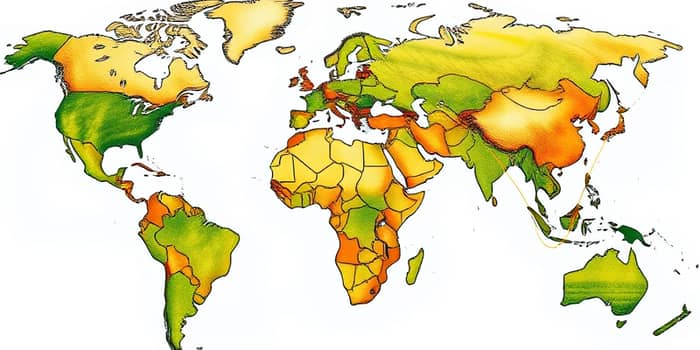
In a world where stability is increasingly fragile, food has emerged not just as sustenance but as a powerful geopolitical lever, shaping nations and markets alike.
Understanding this shift is crucial for investors seeking to navigate the complexities of global trade and security.
The modern era redefines food security as national security, transforming agricultural assets into instruments of influence and resilience.
This article delves into how food intersects with politics, economics, and investment, offering practical insights for those looking to build robust portfolios.
By exploring food as hard power, an investment theme, and a policy-driven market, we can uncover strategies that align with global trends.
The stakes are high, with implications for everything from commodity prices to international relations.
Food security is foundational to national stability, influencing everything from economic productivity to social harmony.
Countries with secure food supplies are more likely to thrive, making this a strategic imperative across regions like the Americas.
The Western Hemisphere stands out as a global food powerhouse, with major producers like the US, Brazil, and Canada driving exports.
This concentration of resources highlights the importance of resilient agri-food value chains in maintaining global supply.
Investors must recognize that food is no longer a humanitarian concern alone but a critical asset in geopolitical maneuvering.
As governments prioritize food stability, opportunities arise for investments in infrastructure and innovation.
Global trade is increasingly fluid, with tariffs and climate shocks introducing uncertainty into food systems.
These factors can alter cost structures overnight, demanding agile strategies from businesses and investors alike.
Tariffs are real and persistent, affecting everything from ingredients to packaging materials in the food industry.
For retailers operating on thin margins, such barriers pose significant risks, necessitating careful planning.
Mission-critical sectors are gaining attention, where governments use tools like subsidies to steer capital toward strategic areas.
Food and agriculture fit this logic, as dependencies can be leveraged in geopolitical relationships.
Climate risk further amplifies these dynamics, with policies on carbon and sustainability shaping market rules.
This environment encourages friendshoring and nearshoring to reduce exposure to hostile jurisdictions.
The outlook for commodities is increasingly optimistic, driven by growth and adaptability despite volatility.
Energy sector investments, particularly in clean technologies, influence food systems through costs like fertilizers and transport.
Global energy investment is set to hit a record $3.3 trillion in 2025, with renewables attracting significant capital.
This shift impacts biofuel markets and agricultural inputs, linking food to broader energy transitions.
Demand for agricultural goods continues to rise, driven by population growth and income increases in emerging markets.
Trade volumes are expanding, benefiting agro-exporters and creating avenues for diversified investment exposure.
New markets like biofuels and plant-based products add growth drivers, reinforcing the structural demand for commodities.
The Americas are positioned as a strategic food hub, leveraging advanced technologies and export capabilities.
This region's dominance underscores the need for alignment to build resilient value chains and ensure food security.
US-China rivalry adds another layer, with competition for influence in food-exporting and insecure countries.
China's trade with the Global South and US economic tools like tariffs shape food-system implications.
Industrial policy interventions have risen sharply, potentially targeting food-related inputs and infrastructure investments.
This table illustrates how different regions contribute to and are affected by food geopolitics.
Navigating this landscape requires identifying themes that capitalize on geopolitical shifts and market stability.
Agri commodities offer structural growth opportunities, especially with rising global demand and trade volumes.
Investing in infrastructure, such as storage and logistics, can mitigate risks from fragmented trade and tariffs.
Diversification is key, balancing exposure to cyclical pricing with long-term structural trends.
Friendshoring strategies reduce geopolitical risks by aligning investments with stable, allied jurisdictions.
Impact investing can adapt to include food security as a priority, blending financial returns with social benefits.
By embracing these themes, investors can build portfolios that are not only profitable but also contribute to global stability.
The journey into food geopolitics is one of opportunity and responsibility, where strategic choices shape a more secure future.
References