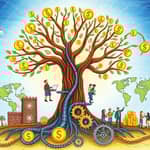
As global population edges toward 9.7 billion by 2050, the stakes for agricultural security and investment have never been higher. From the fertile plains of the American Midwest to the hydroponic farms of the Middle East, stakeholders are navigating a complex web of market forces, technology advances, and geopolitical shifts.
The agribusiness sector today is a powerhouse, projected to grow from USD 3.5 trillion in 2025 to USD 4.5 trillion by 2034 at a steady 2.66% CAGR. At the same time, venture capital poured into AgTech reached USD 16 billion in 2024, focusing sharply on plant science, precision agriculture, and carbon solutions.
Governments and development institutions are stepping up. The World Bank Group has pledged to double to nine billion annually by 2030, targeting productivity, climate resilience, and mobilization of private capital. In parallel, U.S. farmland values defied expectations, rising 4.3% to USD 4,350 per acre in 2025—evidence of enduring investor confidence despite global headwinds.
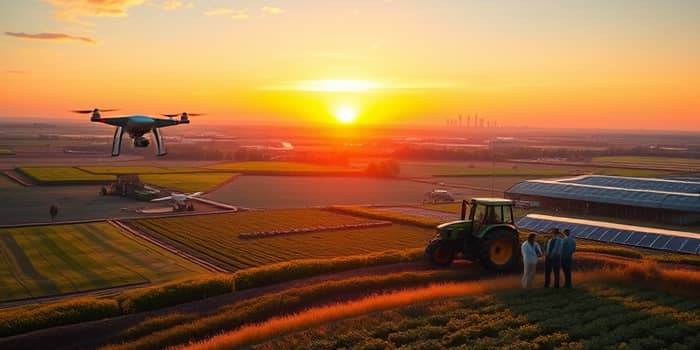
Innovation is rewriting the rules of cultivation. Farms are shifting toward AI-driven precision agriculture, where predictive analytics deliver up to 30% improvements in yield forecasting. Meanwhile, biological inputs and natural pesticides are gaining ground as producers embrace de-chemicalization of broad-acre crops to meet stricter regulations and rising input costs.
Leading segments attracting capital include:
These trends are complemented by clean labeling and traceability efforts—driven by consumer demand and regulatory mandates—that are boosting investment in blockchain and supply chain platforms. Capital flows to startups developing clean labeling and traceability demands are rising rapidly, aiming to reduce recall risks and enhance brand integrity.
Trade dynamics remain a double-edged sword. The U.S.-China soybean agreement for 25 million metric tons has injected stability into global oilseed markets, yet the EU-Mercosur pact threatens to reshape competitive positions across continents. Low-cost producers in South America and Asia are intensifying price pressure on mature markets, while China’s heavy investment in agricultural AI and organics underscores its ambition to secure both food security and export growth.
Climate change and migration are redrawing the agricultural map. Regions like the Upper Midwest and Pacific Northwest are benefiting from moderate warming trends, while arid areas such as the UAE and parts of South Africa turn to vertical farming and hydroponics for water-scarce production. At the same time, land values in climate-resilient zones are rising, reflecting investor anticipation of mass climate migration.
Despite the promise of new technologies, challenges loom. Regulatory frameworks, such as the EU Common Agricultural Policy reforms and the FDA’s traceability rule, are placing fresh compliance burdens on producers. Input price volatility—from fertilizer to energy—can rapidly erode margins, and smallholder farms often lack the capital or technical support to adopt cutting-edge solutions.
Moreover, geopolitical tensions—from sanctions to trade restrictions—introduce uncertainty that can curtail investment. Political risks in major producing regions and evolving energy tax regimes demand careful risk management and diversified portfolios.
Looking ahead, success will hinge on collaboration across stakeholders. Policymakers must craft incentives and de-risking mechanisms to accelerate technology adoption. Investors should prioritize projects with clear environmental and social benefits, aligning capital with the United Nations Sustainable Development Goals. And agribusiness leaders need to integrate holistic risk assessments, balancing short-term gains with long-term resilience.
In an era where the next harvest could determine the stability of nations, the convergence of geopolitics, finance, and innovation offers both profound challenges and unprecedented opportunities. By embracing resilient regenerative agriculture solutions and ethical investment strategies supported by World Bank's nine billion annual commitment, stakeholders can help secure the future of food for billions while generating sustainable returns.
References