The global economy is entering an era of unprecedented transformation as nations, corporations, and investors compete to develop and deploy clean technologies at scale. From policy-driven decarbonization to the surge in venture capital, the stakes have never been higher. This article explores three pivotal dimensions of this unfolding competition: why the race exists, where capital is flowing, and the implications for markets, industries, and geopolitics.
Climate urgency and policy pressure have thrust green innovation into the spotlight. Despite widespread commitments, global emissions increased 1.3% from 2022 to 2023, underscoring that existing measures are insufficient. Around 35% of the CO₂ reductions needed to meet long-term objectives must come from technologies not yet commercially available. Governments worldwide are tightening climate targets and regulatory pressure, making clean solutions both necessary and profitable.
In parallel, investment is shifting from fossil to clean investment. In 2025, clean energy technology spending—covering renewables, green hydrogen, and carbon capture—is projected to reach $670 billion in 2025, surpassing upstream oil and gas for the first time. Within this surge, solar PV alone will account for roughly half of all cleantech investments and two-thirds of new megawatt capacity.
It is important to distinguish green tech versus ESG investing. While ESG embraces governance and social criteria alongside environmental factors, climate tech investing zeroes in on technologies with a direct emissions impact—renewables, storage, grid innovations, and electrified transport. This focused approach channels capital into the most transformational solutions.
The market for green technology and sustainability solutions is expanding at breakneck speed across two dimensions: narrow sustainability software and services, and broader cleantech infrastructure. Estimates vary but agree on rapid growth beyond 20% CAGR through the decade.
Leading application areas include energy management, carbon accounting, supply-chain transparency, and climate risk assessment. Key enabling technologies range from AI-driven analytics and IoT sensors to blockchain platforms for carbon markets and advanced cybersecurity for critical infrastructure. Software dominates the market, but services such as consulting and systems integration are gaining share as companies navigate complex decarbonization pathways.
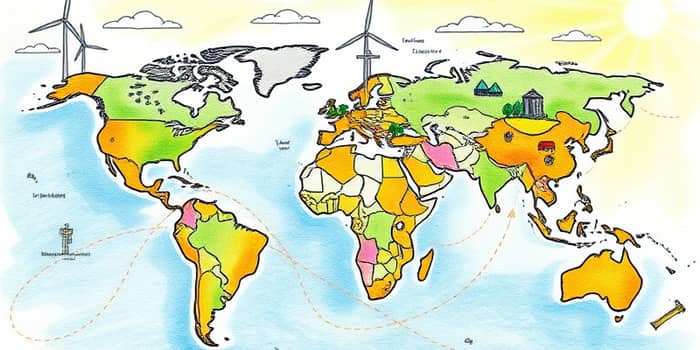
Europe currently holds the largest share of the green technology software market. Bolstered by the EU Green Deal and ambitious carbon neutrality goals, the region is investing heavily in renewables, smart grids, and circular-economy projects. High consumer awareness and stringent regulations are creating fertile ground for innovators.
The Asia-Pacific region is set to be the fastest-growing market from 2025 to 2030. Rapid urbanization and rising environmental concerns in China, India, and Japan are driving sweeping investments in clean energy, smart cities, and eco-industrial processes. Government funding and private capital are pouring into AI-enabled climate solutions and blockchain for supply-chain traceability.
China leads in absolute green tech spending, outpacing other nations in solar manufacturing, battery production, and EV deployment. According to S&P Global, China will add nearly twice as many gigawatts per dollar invested as the U.S. in 2025. The United States, meanwhile, benefits from the Inflation Reduction Act, the CHIPS and Science Act, and state incentives that accelerate clean energy projects and domestic manufacturing of key components.
Renewable power leads the charge: in 2025, solar PV is expected to absorb half of all cleantech funding, adding over 620 GW of capacity. Global renewable generation is projected to double—an increase of 4,600 GW—between now and 2030.
Investment in grids and distributed energy is also surging. Nearly one-third of cleantech spending will target behind-the-meter storage and small-scale solar, reflecting the rise of decentralized, prosumer models.
Electrified transport remains a major battleground. The EV market has taken off, driven by policy support and consumer demand. Battery supply chains and critical minerals have become strategic priorities, with competition centered on technology, manufacturing capacity, and brand leadership.
Green hydrogen and carbon capture are emerging technologies in 2025’s $670 billion energy spend. Though smaller than solar and wind, they are vital for decarbonizing steel, cement, and other emissions-intensive industries that lack alternatives.
For investors, the green technology race offers a blend of growth and resilience. Diversified portfolios that span software services, infrastructure assets, and venture-backed climate tech can capture upside across the transition. Active engagement with policy developments and supply-chain dynamics is essential.
Industries face both opportunity and upheaval. Legacy players must innovate or risk obsolescence, while startups with breakthrough solutions are securing record funding. Partnerships between incumbents and agile disruptors are becoming a winning formula.
Geopolitically, the shift to renewable energy is redrawing lines of influence. Countries leading in green manufacturing, critical minerals, and digital climate solutions will wield significant soft power. Energy independence through renewables can alter trade balances and reduce vulnerability to fossil fuel shocks.
As the race intensifies, the winners will be those who marry bold vision with pragmatic execution—deploying capital where it accelerates innovation, scales solutions, and delivers tangible emissions reductions. In this defining moment, every investment decision shapes the future of our planet and our economies.
Embrace the opportunity to invest in a cleaner, more resilient world—a transition that promises to create value for investors, industries, and society at large.
References