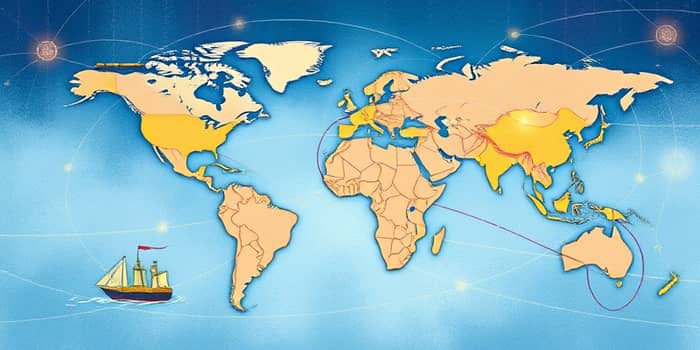
Imagine a world where ancient trade routes are reborn with modern vigor, connecting distant lands through vast networks of infrastructure and digital innovation.
This vision is reality through the Belt and Road Initiative (BRI), a monumental effort launched in 2013 that redefines global commerce.
Often called the New Silk Road, it aims to foster unimpeded trade and financial integration across over 140 countries.
The BRI was proposed by Chinese President Xi Jinping during visits to Kazakhstan and Indonesia in 2013.
It symbolizes a shift towards open and inclusive globalization, blending historical symbolism with contemporary economic strategies.
The initiative has two primary components: the Silk Road Economic Belt and the 21st Century Maritime Silk Road.
These corridors are designed to reduce reliance on traditional sea lanes like the Malacca Strait.
Key motivations include creating new markets for Chinese industries and enhancing geopolitical influence.
The overland corridors traverse Eurasia, linking China to Europe through diverse regions.
Each corridor serves as a vital artery for trade and cultural exchange.
Maritime routes enhance port connectivity from Southeast Asia to Europe.
Key nodes include Hambantota in Sri Lanka and Piraeus in Greece.
The Polar Silk Road explores Arctic shipping routes for faster transit.
Digital Silk Road focuses on telecom networks and smart cities.
The BRI's scale is staggering, with cumulative investments exceeding USD 1 trillion over a decade.
This financial commitment supports infrastructure and development projects worldwide.
In 2023 alone, agreements worth USD 92.4 billion were signed.
Non-financial direct investment saw a 20.1% year-on-year increase.
Financing mechanisms include policy banks and multilateral platforms.
BRI investments significantly reduce trade costs and transit times.
This fosters agglomeration economies in manufacturing hubs.
Export growth is enhanced, particularly in Southeast Asia and Africa.
Improved logistics support global value chain integration.
Developing economies can move up value chains with better infrastructure.
The Digital Silk Road promotes data-center investments and satellite navigation.
This shapes digital standards and governance along trade routes.
Chinese outward foreign direct investment (OFDI) is channeled through BRI projects.
Focus areas include energy, manufacturing, and digital infrastructure.
This improves the global value chain positions of participating countries.
Sectoral patterns show a shift towards sustainable and high-tech industries.
BRI fosters deeper financial linkages and renminbi internationalization.
It encourages public-private partnerships for long-term sustainability.
While the BRI offers immense opportunities, it faces challenges like debt sustainability and transparency.
Balancing economic gains with environmental and social impacts is crucial.
Future prospects include expanding into Latin America and Oceania.
The initiative could lift millions out of poverty through increased income.
For businesses and individuals, understanding BRI dynamics opens doors to new markets.
Embracing this connectivity can lead to collaborative ventures and shared prosperity.
The New Silk Road is not just about infrastructure; it's about building bridges between cultures.
It inspires a vision of a more interconnected and equitable world.
By leveraging these networks, stakeholders can navigate global trade with confidence.
This initiative reshapes our economic landscape, offering practical pathways for growth.
As we look ahead, the BRI symbolizes hope and resilience in a changing world.
Let it be a catalyst for innovation and cooperation across borders.
References