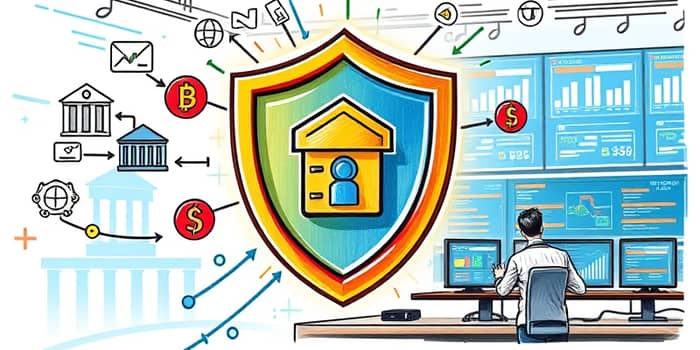
In today's digital landscape, financial institutions stand on the front lines of a relentless cyber war, where the stakes are nothing less than trust, stability, and billions in assets.
Every day, sensitive data like personal information and payment details becomes a target for sophisticated adversaries, making reactive defenses insufficient.
Threat Intelligence Platforms (TIPs) emerge as a transformative solution for proactive security, empowering organizations to anticipate and neutralize dangers before they strike.
This article delves into how TIPs reshape financial cybersecurity, offering practical insights to inspire and fortify your defenses.
The financial sector faces unparalleled risks due to its immense value as a target.
High-profile breaches, such as those at Latitude Financial and Morgan Stanley, underscore the devastating impact: financial losses, operational chaos, and irreparable reputational damage.
These incidents highlight the urgent need for advanced, preemptive measures.
Common threats include account takeover and credential stuffing, where attackers exploit stolen login details through automated tools.
To combat this, a multi-layered defense is essential.
Firewalls, encryption, and access controls form the foundation.
However, integrating threat intelligence through TIPs allows for anticipation, turning potential disasters into manageable risks.
A Threat Intelligence Platform (TIP) is a centralized software solution designed to transform raw data into actionable insights.
It aggregates, analyzes, and operationalizes cyber threat intelligence (CTI) from diverse sources, serving as the backbone for security operations centers (SOCs) and analysts.
By harnessing this technology, financial institutions can move from a reactive posture to a strategic, intelligence-driven approach.
This shift is critical for staying ahead of evolving threats.
TIPs handle various types of intelligence, including operational insights on tactics and procedures.
This comprehensive coverage ensures that no aspect of threat management is overlooked.
TIPs excel through a series of core functions that streamline cybersecurity workflows.
They aggregate data from sources such as open-source intelligence (OSINT), commercial feeds, and internal logs.
Normalization and enrichment convert this data into standardized formats, adding context with frameworks like MITRE ATT&CK.
These functions culminate in bi-directional sharing, fostering collective defense among partners.
This collaborative edge is vital for financial ecosystems, where threats often target multiple institutions simultaneously.
Implementing TIPs delivers tangible advantages, from cost savings to enhanced compliance.
They provide enhanced visibility into threat landscapes, enabling early detection of exposed credentials.
This proactive hunting capability blocks phishing sites and fraudulent activities before exploitation occurs.
These benefits translate into significant cost reductions and improved operational resilience.
For instance, automation slashes mean time to respond (MTTR), allowing rapid containment of incidents.
Real-time intelligence covers malware, botnets, and exploits, keeping defenses agile and responsive.
Case studies demonstrate the practical impact of TIPs in financial settings.
Recorded Future clients have leveraged TIPs to profile ransomware TTPs, saving valuable analyst time.
Alerts on peer-targeted actors enabled a UK bank to block a phishing domain proactively.
In North America, an institution stopped fraudulent check scams via Telegram intelligence feeds.
These examples highlight how TIPs offer visibility into dark web activities, such as stolen card sales.
By integrating such insights, firms can preempt merchant compromises and safeguard transactions.
Effective integration is key to maximizing TIP benefits.
Start by assessing feed coverage for industry-specific and real-time intelligence.
Ensure compatibility with existing tools like SIEM for correlation and EDR for endpoint updates.
SOCs, threat hunters, and compliance teams are primary users, leveraging TIPs to protect customer data.
This strategic approach builds a shared understanding of risks, accelerating organizational resilience.
Several vendors offer robust TIPs tailored for financial security.
Enzoic specializes in dark web-focused intelligence with dynamic databases.
ThreatConnect provides comprehensive collection and analysis features for hunting and compliance.
Other key players include Microsoft, Palo Alto, and IBM, which stress the importance of data collection and application.
Choosing the right platform depends on specific needs, such as integration depth and threat coverage.
The evolution from reactive to proactive security is not just a trend; it's a necessity for survival in finance.
TIPs address challenges like data overload and false positives, turning chaos into clarity.
By adopting these platforms, institutions can build a culture of intelligence-driven defense.
This journey requires commitment but promises unprecedented risk reduction and customer trust.
Start by exploring vendor solutions and integrating TIPs into your security strategy today.
Your financial integrity depends on it.
References