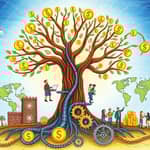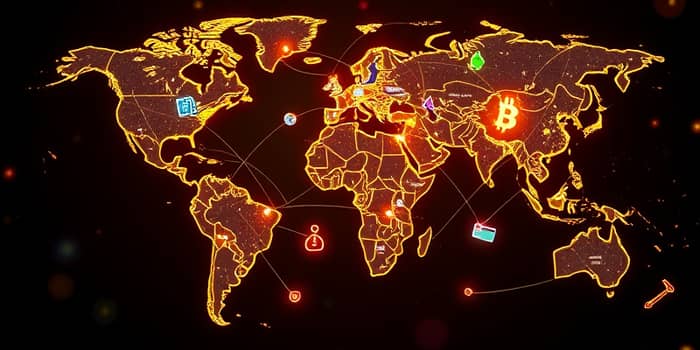
Every day, billions of transactions crisscross the planet, quietly fueling commerce, livelihoods, and dreams. These flows may appear seamless, but beneath the surface lies a complex network—the foundational plumbing of finance—that powers every purchase, transfer, and settlement.
From a small grocery purchase in Nairobi to a multinational corporation’s cross-border supply payment, this network underpins global prosperity. As we stand at the cusp of unprecedented technological change, understanding these systems is not a luxury—it’s a necessity for anyone seeking to shape the future of money.
Over the past thirty years, globalization and digitalization have transformed payment rails. Traditional card networks like Visa and Mastercard enabled rapid consumer adoption, while Automated Clearing Houses (ACH) and correspondent banking fueled business transfers.
However, geopolitical shifts—sanctions on Russia, regional sovereignty drives in Europe and Asia—sparked new domestic schemes, from Russia’s Mir to China’s co-badged UnionPay. This fragmentation highlights the tension between global interoperability and national control.
At its core, the global payment landscape comprises several key rails and innovations that together handle $2.0 quadrillion in annual value flows.
Each rail offers unique advantages and challenges. Card-based ecosystems face interchange caps, while real-time payments transforming commerce demand new liquidity and fraud tools.
As we move forward, six trends will define the next chapter of payments innovation:
These trends are interdependent. For example, the rise of stablecoins encourages new cross-border corridors, while AI enhances security across all rails.
Three structural forces will determine whether the industry converges on global standards or splinters into regional blocs:
Major consultancies predict sustained revenue growth—up to $3.0 trillion by 2029—driven by cards, instants, and emerging ecosystems. Yet, this growth is neither guaranteed nor evenly distributed.
Two contrasting futures await:
• The Optimistic Multirail Ecosystem: Global standards emerge as a “passkey,” fostering innovation and interoperability. Payment flows become frictionless across borders, and new entrants thrive.
• The Pessimistic Localized Model: Geopolitical tensions lead to bilateral systems, raising costs and fragmenting liquidity. Stablecoins fill connectivity gaps, but complexity increases.
Understanding these scenarios helps stakeholders navigate risks and seize opportunities in markets from India’s UPI to Brazil’s Pix.
Whether you are a bank, fintech, or merchant, proactive strategies will determine success:
Embrace experimentation. Pilot cross-border tokenization, explore stablecoin corridors, and contribute to industry standards for a resilient, inclusive payments future.
Global payment systems may seem invisible, but they are the lifeblood of commerce. By understanding their history, components, and emerging forces, you can not only adapt to change but also lead it—ensuring every transaction becomes an opportunity for innovation and impact.
References