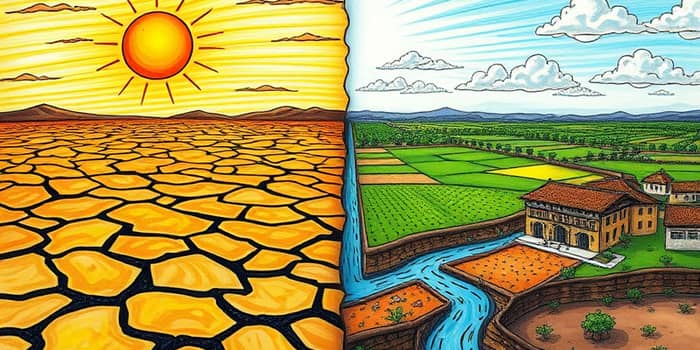
Across continents and economies, the relentless advance of water scarcity is testing the limits of human ingenuity and the resilience of global markets. Today, an estimated 2.1 billion people lack access to safe drinking water, while nearly 500 million endure year-round scarcity. These figures are more than statistics; they represent real families facing daily hardships and towering uncertainties. From parched farmlands in Sub-Saharan Africa to dried-up reservoirs in industrial powerhouses, the looming crisis threatens to undermine food security, economic stability, and social cohesion. In this article, we will explore the cascading impacts of water scarcity and chart a path toward resilient investment strategies.
By examining the root causes—from inefficient irrigation and rampant groundwater depletion to unchecked industrial demands and climate change—we will uncover a path forward. Business leaders, investors, and communities must unite around a shared global commitment to water stewardship. Far from a distant challenge, today’s choices will shape the prosperity of future generations. Let us delve into the scale of the crisis, the economic toll, and the innovative strategies ripe for adoption.
Water scarcity is not just a humanitarian issue but an economic one. With agriculture consuming 70% of global freshwater, more than half of world food production is at risk in areas where water storage is declining. Projections indicate that 23% of cereal yields could vanish if irrigation becomes unfeasible, jeopardizing the staple diets of billions. Meanwhile, industry accounts for 19% of withdrawals, and energy production increasingly competes for dwindling supplies. The United Nations warns that we must triple to $1 trillion annually in investments to meet basic needs and ensure sustainable access. Failure to act will shrink GDP by up to 6% in vulnerable regions by 2050.
Regions such as Central Asia, the Middle East, and parts of Africa already face dramatic declines in water tables and reservoir capacities. In high-income countries, the average GDP could contract by 8%, while some lower-income nations risk reductions of 10–15%. The human toll, measured in lost livelihoods, growing inequality, and heightened conflict over shared resources, underscores the urgency of a systemic response.
Water scarcity inflicts direct operational disruptions across a spectrum of industries. Farms yield smaller harvests, power plants scale back production, and factories struggle to secure critical cooling water. In Taiwan, a severe 2021 drought forced chip manufacturers to cut water use by 15%, effectively halting 90% of global advanced chip production for weeks. Such shocks travel swiftly through supply chains, sending raw material costs soaring and delaying deliveries. Inland waterways drying up block trade arteries, compounding uncertainty and fueling price volatility.
Beyond operational challenges, businesses bear rising regulatory costs and reputational risks. Stricter water withdrawal caps, fines for pollution, and compliance hurdles threaten bottom lines. In 2022, contaminated water and depletion resulted in $13.5 billion in stranded assets for oil, gas, and mining companies. The consumer staples sector alone faces a $200 billion impact from agricultural water dependence. Investors are awakening to these risks, recognizing that inaction could be 18 times more costly than proactive measures.
Forward-thinking organizations are adopting strategies that not only mitigate risk but unlock new value. By prioritizing water efficiency, embracing circular processes, and strengthening community partnerships, businesses can build resilience against recurring droughts and regulatory shifts. Investors find that sustainable water management often yields measurable returns, from lowered operational costs to enhanced brand loyalty. According to the CDP 2020 report, companies leading on water stewardship protected over $300 billion in enterprise value.
By leveraging data-driven management enabled by satellite monitoring and AI, farmers and factories can optimize allocations, reducing waste and anticipating shortages before they become crises. These approaches demand collaboration between private and public sectors. Governments can revise water pricing, support decentralized systems, and integrate water into climate finance frameworks. A commitment to transparent reporting and cross-border dialogue is essential to mobilize the $58 trillion economic value tied to freshwater ecosystems.
In rural India, farm laborer Sasmita spent hours each day hauling 35 pounds of water to her home. Through community-led borehole drilling and rainwater harvesting, her village achieved reliable access within months. The ripple effects were profound: children attended school regularly, local businesses flourished, and health improved. This grassroots victory exemplifies how targeted investments can transform lives overnight.
Conversely, when industries hoard water without reinvestment, local populations bear the brunt. The 2018 drought in parts of South America decimated cereal crops, triggering food price spikes and social unrest. By contrast, regions that invested in water storage and efficient irrigation systems weathered the drought with minimal disruption, reinforcing the lesson that foresight and investment pay dividends during crisis.
The challenge of water scarcity demands nothing less than a global movement. Every stakeholder—investor, entrepreneur, farmer, policymaker—has a role to play. By aligning capital with sustainability goals, we can close funding gaps, spur innovation, and fortify our shared future. Imagine a world where drought-stricken basins transform into thriving agroforestry hubs, where data dashboards guide every drop, and where no child thirsts for safe water. This vision hinges on action today.
Water connects all facets of life and commerce. When we safeguard this resource, we invest in health, stability, and prosperity. The choices we make now—whether to upgrade infrastructure, revise regulatory frameworks, or champion community-led solutions—will echo for generations. Let us embrace this moment, not as a harbinger of scarcity, but as an opportunity to forge a resilient, equitable global water economy.
References