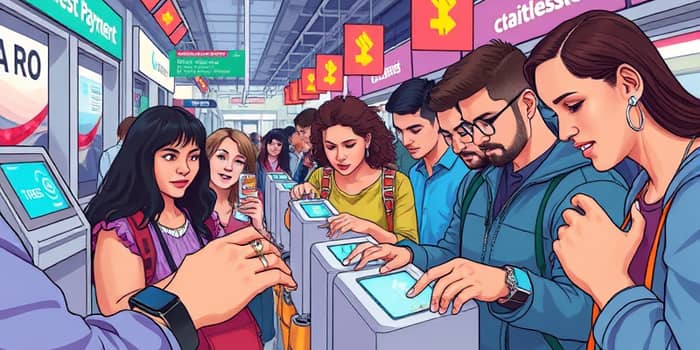
Wearable payment devices are reshaping how consumers interact with money, blending finance with fashion and fitness. From smart rings to payment-enabled clothing, the landscape is expanding rapidly.
As everyday objects gain payment capabilities, the promise of truly frictionless transactions moves closer to reality.
Global research firms converge on projections that place the wearable payments market between USD 145 billion and USD 160 billion by 2030. These forecasts underscore a double-digit growth trajectory in value that appeals to investors and innovators alike.
Several factors are fueling this expansion, from infrastructure to consumer behavior.
Adoption patterns vary significantly across regions, reflecting infrastructure, consumer culture, and regulation.
The wearable ecosystem is diversifying beyond watches to devices that blend invisibly into life.
Real-world deployments are capturing consumer attention across daily activities.
Retail and Grocery: Wearables now process 46% of application revenue, mirroring early contactless card usage.
Transportation & Ticketing: Transit open-payment systems foster daily tap habits, often becoming users’ default payment method in nearby shops.
Events and Hospitality: NFC-enabled bands and rings streamline stadium purchases and resort check-ins, boosting convenience and spending.
Enterprise Access: Smart rings and badges combine building entry with cafeteria payments, enhancing security and employee satisfaction.
Health & Fitness: Consumers draw on robust health metrics before exploring payment features, cementing dual-purpose adoption.
Underpinning this revolution is a robust tech stack ensuring both convenience and safety. Secure elements, host card emulation, and tokenization create layers of protection that mirror or exceed those in traditional cards.
Advanced biometric authentication—fingerprint sensors, voice recognition, and skin conductivity checks—enforce uncompromised security protocols with biometric authentication.
Interoperability standards like NFC Forum specifications and EMVCo certifications guarantee cross-border acceptance and device compatibility.
Tech giants, fintech startups, and traditional banks are all vying for leadership.
Apple Pay and Google Wallet extend seamlessly to watches. Fitbit and Garmin integrate payment chips. Fintech innovators like Oura and Token launch rings and bracelets. Banks partner with fashion brands to create co-branded payment jewelry, catalyzing consumer excitement.
Surveys reveal that early adopters prize speed and novelty, while mainstream users cite hygiene and convenience as primary motivators. Younger demographics view payment wearables as status symbols and fashion statements.
User experience studies indicate that once consumers tap their device for transit or coffee, they rarely revert to cards, creating a powerful network effect.
Despite promise, obstacles remain. Device battery life, interoperability gaps, and consumer education slow some segments. Data privacy and cross-border transaction regulations demand vigilance.
Regulators under PSD2 in Europe and similar frameworks in APAC emphasize strong customer authentication, setting rigorous standards for wearable payment compliance.
The next frontier extends beyond bars and stores. Integration with AR glasses for in-view payment confirmations, voice-activated rings that authorize payments by command, and body-area networks that manage transactions across multiple wearables are on the horizon.
As costs fall and ecosystems mature, we anticipate embedded, ambient payments in everyday wearables to become as common as tapping a card today. Consumers will enjoy unprecedented freedom, and businesses will unlock new channels of engagement.
In this evolving landscape, staying informed and embracing innovation will be key. Wearable payments are not just a trend—they represent a fundamental shift toward truly frictionless commerce.
References